FEATURED ARTICLE

The Problem of Pain

Chronic pain affects over 1.5 billion people globally, with traditional medications often causing significant side effects. coMra therapy presents a safer alternative by combining laser therapy with magnetism, ultrasound, and…

Read this article
The Problem of Pain
Browse our blog and see all articles

Customer services

Our customer services team are seasoned practitioners of coMra therapy with over a decade of experience.

If you're considering a coMra device – but have questions not covered in our extensive Resources and FAQ pages – please send us an email and we'll get back to you soonest:

info@comra-therapy.com

User support

If you already own a coMra device and need help with your device, with your treatments – or with any technical issues – please reach out to us here.

Click through on the link below, send us an email and we'll get back to you:

support@comra-therapy.com

Schedule a call

If you'd rather speak with one of our experienced customer service team members, you can schedule a call with us instead.

Please click through on the Calendly link below and one of our customer service team will get back to you:

calendly.com/comra-support-team

Chat with us

Alternatively, our customer service team are on hand to answer your queries between 9:00–5:00 EST.

Please click through on the link below, or simply click the floating Chat icon on the bottom right of the screen.

Chat with customer services now!
CONTACT US

Get in touch with us

Have a question or need help? Send us a message and we'll get back to you as soon as possible.

WARRANTY

Register your coMra device!

If you recently purchased one of our coMra devices, welcome to the family! Please fill out the registration form below to activate your warranty.

How do I find my serial number? Found on the sticker on the back of your original product box.

FAQs on Conditions and Protocols

Beauty & Longevity coMra Basics coMra Wave Devices & Choosing For Practitioners Health & Prevention Mind & Body Performance Nerves & Neuropathy Pain Relief Pet Health Safety & Usage
Question:

What should I do if symptoms flare up partway through a course?
Answer:

Continue the course. In serious or long-standing illness the body cycles through depletion, build-up and fighting, and symptoms can briefly look worse than before treatment started – that is the body engaging with the reserve it now has, not the treatment failing. Each successive flare is weaker than the one before it, and the gaps between them lengthen until recovery holds. The same holds when pain returns a few hours after an early session in a chronic case: coMra delivered a genuine metabolic lift that is not yet sufficient for the damage, which is a different thing from an analgesic wearing off.

Read more →

Question:

What do 5 Hz, 50 Hz, 1000 Hz and Variable mean on a coMra protocol?
Answer:

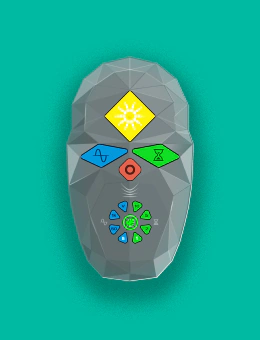
They set how deep the treatment reaches. 5 Hz works at 5–10 cm, for internal organs, blood and skeletal structure; 50 Hz at 1–2 cm, for muscle disorders, injuries and anything close to the skin; 1000 Hz at the surface, for skin conditions, burns, open wounds, the mouth, nose and ears, and the central nervous system; Variable cycles through all three, for joints and fractures where several depths are involved at once. Two rules never vary: the heart area is treated at 5 Hz and at no other frequency, and 5 Hz is never used on the brain.

Read more →

Question:

Is more or longer coMra treatment better?
Answer:

No. Each of the four radiances runs at low intensity within a broad safe window, and their synergy – not their strength – produces the effect, so there is no gain from driving the device harder and no overdose risk. The protocols already sit in the stimulatory part of the dose response; going beyond adds nothing. What decides the result is applying the right frequency at the right points on the schedule the protocol sets – including its rest periods, which lose effect if stretched past the stated interval.

Read more →

Question:

When should I expect to notice results from coMra?
Answer:

In a set order rather than at a single moment. Relief of pain and a sense of wellbeing come first, often within the first session, because cellular energy metabolism normalises within minutes. Sleep, digestion and mood restore over days as tissue-specific function resumes; neuro-immuno-endocrine regulation shifts over weeks; regeneration of tissue structure follows over weeks to months. Improvement at one layer while the next has not yet appeared is the normal sequence, not stagnation – and it is how you read where you are in the process.

Read more →

Question:

Can I adapt a coMra protocol, or must I follow it exactly?
Answer:

The points you treat and the rhythm of the course are what you adapt; the frequency each point calls for and the safety rules are not. There is no intensity to titrate – the device works inside a fixed synergetic range, so the variables in your hands are treatment site and treatment duration. The User Guide's protocols are a starting point, and you can extend them as your own experience grows. What stays fixed: frequency follows tissue depth, and the heart area is always treated at 5 Hz.

Read more →

Question:

Can I treat two conditions at the same time?
Answer:

Yes. Protocols are designed to be combined – to cover a local problem and a systemic one together, to address several co-occurring conditions in one person, or to treat an acute flare-up sitting on top of a chronic condition. The usual pairing is a systemic protocol (Universal 3, 5 or 7) plus the condition-specific one. Two rules apply when protocols are stacked: if more than one of them calls for the heart point, treat it only once in the session, and leave at least a couple of hours between separate sessions on the same day.

Read more →

Question:

Why do coMra protocols include a two-week rest period?
Answer:

Because the effect of the irradiation continues through the rest – the body keeps working with the reserve the course built, and healing responses sometimes intensify once the stimulation stops. Rest periods are taken once definite improvement has been achieved; until then, continue the course without them. The rest should also not run longer than the protocol specifies, since an over-long gap loses the accumulated effect rather than adding to it.

Question:

Why does a full course matter more than a single session?
Answer:

Because each session raises the cell's functional reserve a little, and sessions that follow before the reserve falls back accumulate on top of each other. A single session can produce real effects – pain easing, a feeling of lightness, better sleep that night – but structural repair only consolidates when the reserve is held above the load that is damaging the tissue for long enough. Sessions spaced too far apart in a depleted body lose ground in between. Consistency across a course is what changes the outcome, not the length of any one session.

Read more →

Question:

How long does a coMra treatment course last?
Answer:

Two to three weeks for most protocols. The Universal routines are applied twice daily until definite improvement is noticed and then for seven more days; the multi-day routines run fixed cycles of six, ten or twelve days. Acute injuries are treated until improvement is evident, which can be a matter of days. Chronic and structural conditions need repeated courses over months, and where there is long-standing damage, over years – regeneration proceeds in stages and cannot be compressed.

Read more →

Question:

What if my condition is not listed in the coMra User Guide?
Answer:

Begin with Universal Treatments 3 and 5 – the systemic pair is the standard starting point when no named protocol applies. The conditions listed in the Guide are examples of coMra's versatility, not a closed list: the biophysical effects of the four radiances are not disease-dependent, so the same restored functional reserve is available to the tissue whatever the diagnosis is called. Where the concern is local, treat the area of primary concern at the frequency that matches its depth. As you gain experience, you can extend the protocols and build on them.

Read more →