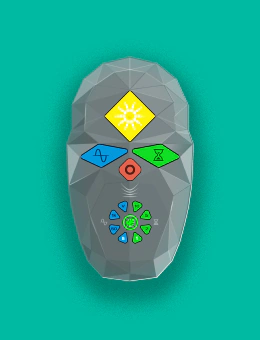
Search the coMra User Guide by condition name, or browse the medical section the condition belongs to – Cardiology for heart conditions, Traumatology for joints and injuries, Dermatology for skin, Gastroenterology for digestion, and so on. The Guide is available as a searchable web application, as iOS and Android apps, and as a printable PDF, in English, Spanish and German. Version 5.1 holds over 100 treatments covering more than 200 conditions, and every protocol comes with a diagram showing exactly where each treatment point sits on the body.
It is a 10-day cleanse protocol that supports all the major elimination organs at once. Part 1 rotates through colon, abdomen, right hypochondrium, spleen and pancreas, and kidney points on a five-day cycle run twice; Part 2 adds the Blood points every second day. It is used to prepare for and accompany a detox or dietary programme, for seasonal cleansing, and after periods of poor diet, stress or toxin exposure. coMra does not deplete the body during a cleanse – it gives each organ additional energy while it works, so mild tiredness or a skin reaction during the course is the body clearing; drink plenty of water and keep moving gently.
Universal 5 and Universal 7. Universal 5 (Somatic Biostimulation 2) is a 23-minute routine over sternum, head and adrenal points, indicated for emotional exhaustion, depression, insomnia, lethargy, adrenal dysfunction and stress – applied twice daily until improvement, then for seven more days. Universal 7 (Nervous System) is Universal 5 plus the Blood points every second day, for fuller nervous-system and circulatory support. Any session that includes head or heart points is followed by 5 to 10 minutes of rest.
Universal 4 (Somatic Biostimulation 1) addresses physical exhaustion and is the general wellbeing routine for anyone doing heavy physical work – athletes, dancers, gymnasts. It runs as a six-day cycle, one part per day, then a two-week rest and one repeat. Universal 6 (Vitality) extends it into a 12-day cycle: the same six-day rotation run twice with the Blood points added every second day, indicated for recuperation from illness, recovery from surgery, maintenance of the ageing body, fitness programmes and chronic fatigue. Universal 6 is then repeated every six months, or as often as wanted.
Universal 3 irradiates the full volume of circulating blood without anything entering the body, by treating arterial points where blood runs close to the surface – carotid, subclavian, axillary, anconeal (inner elbow) and femoral arteries, both sides. The session is 10 minutes at 5 Hz, one minute per point. For general wellbeing it runs once daily every second day for 20 days, followed by a two-week rest, and is typically repeated every six months. It is the single most called-in component of other protocols, because oxygen transport, immune defence and clotting all depend on the blood.
If you have a named condition, start with the protocol the User Guide lists for it. If you are starting for general wellbeing, recovery or prevention, choose the Universal Treatment that matches your goal: Universal 3 (Blood) for systemic support and immunity, Universal 6 (Vitality) for physical exhaustion and recuperation after illness or surgery, and Universal 5 or 7 for stress, sleep and emotional exhaustion. You do not need medical expertise to run any of them – knowing the frequency and time settings is enough, and the protocol tells you both.
They are eight baseline protocols that support the body as a whole rather than one organ, and they form the foundation that the condition-specific protocols build on. Universal 1 (HEAD) supports the head region, Universal 2 (HEART) the heart and coronary circulation, Universal 3 (BLOOD) the circulating blood, Universal 4 and Universal 5 are the two Somatic Biostimulation routines for physical and emotional exhaustion, Universal 6 (VITALITY) combines somatic and blood support, Universal 7 (NS) supports the nervous system, and Universal 8 is the complete organ and cleanse treatment. They are the go-to routines for fatigue, recovery from illness or surgery, and preventive maintenance – and many condition protocols call one of them in as a component, most often Universal 3.
A protocol is a named sequence of treatment points, each with its own time and frequency, plus a schedule saying how often to repeat the sequence and for how long. Every protocol in the coMra User Guide has the same shape: the indications it is chosen for, a total session time, a table of points (minutes per point, Hz per point), and a course pattern – for example "twice daily until improvement is noticed, then continue for seven more days." You work through the table top to bottom and apply it as written; the only device setting a protocol asks you to change is the frequency it names.
Yes. coMra supplies damaged joint tissue with the energy it needs to repair itself, improves the transport of molecules and the work of enzymes in the tissue, and supports the repair of damaged cartilage. The result is less pain and inflammation and better joint function.
Joint degeneration such as osteoarthritis was long seen as irreversible, but research shows that joint tissue can repair with the right stimulation. coMra is non-invasive and safe for long-term use at home, and it works best combined with regular exercise and other supportive measures.
Yes. The coMra user guides include protocols for acne, scars, wounds and burns, stretch marks, ageing skin and redness, and the surface setting (1000 Hz) is the one used for skin. Because skin conditions often reflect an internal imbalance, local treatment is usually combined with a Universal protocol such as Universal 3 (Blood). Wounds and burns respond quickly; chronic skin conditions improve over a longer course, with comfort and colour changing first and texture following over weeks.