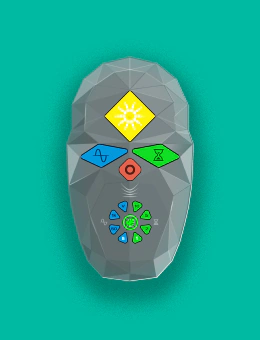
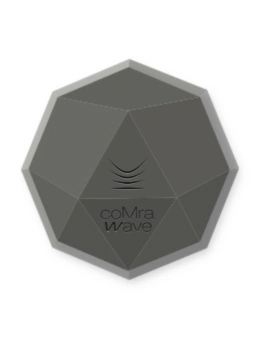
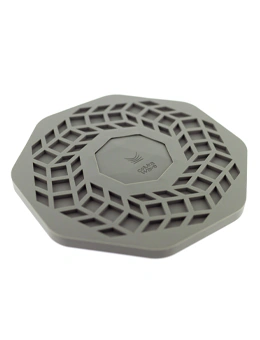
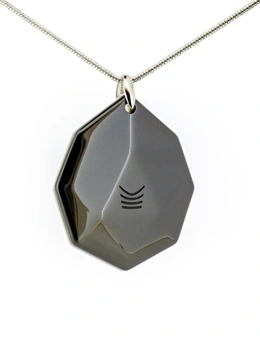
coMra builds on low-level laser therapy (also called photobiomodulation), a well-researched way of supporting cells with gentle light, and adds a magnetic field, ultrasound and coloured light to it. Together they help cells produce more energy and move molecules more efficiently: the laser and the magnetic field open an additional route for the cell to make its energy, and the ultrasound speeds up transport through the tissue. Like all low-level light therapy, it follows a simple rule – low doses stimulate the cell, high doses inhibit it – and coMra keeps every radiance low, in the stimulating range. In one sentence: your body does the healing, and coMra gives your cells the energy for it.
Effectively no – coMra has no absolute contraindications, so it comes down to a couple of practical precautions, all listed in the User Guide, rather than ruling people out. The one to remember: keep the device at least 30 cm away from a pacemaker or artificial valve, because of its static magnetic field. Everything else in that family is fine – metal implants, stents, artificial joints and tissue inserts all interact safely, and the field isn't strong enough to move or heat them. Pregnancy, cancer care and eye work are all within scope; for the eyes, skip 5 Hz and keep them closed for points on the orbit, and low-level laser at coMra's wavelength and power doesn't stimulate tumour growth.
Yes on both counts, and nothing has to be stopped or paused. coMra is compatible with pharmaceutical medication and doesn't ask anyone to come off anything; as healing progresses patients often find they need less, which tends to happen of its own accord. Around surgery it's one of the clearest applications – beforehand to prepare, and after any major intervention, since pain relief and tissue stabilisation begin during the session itself. Protocols also combine, so a local problem and a systemic one, or a flare-up on top of a chronic condition, can all be covered in the same visit.
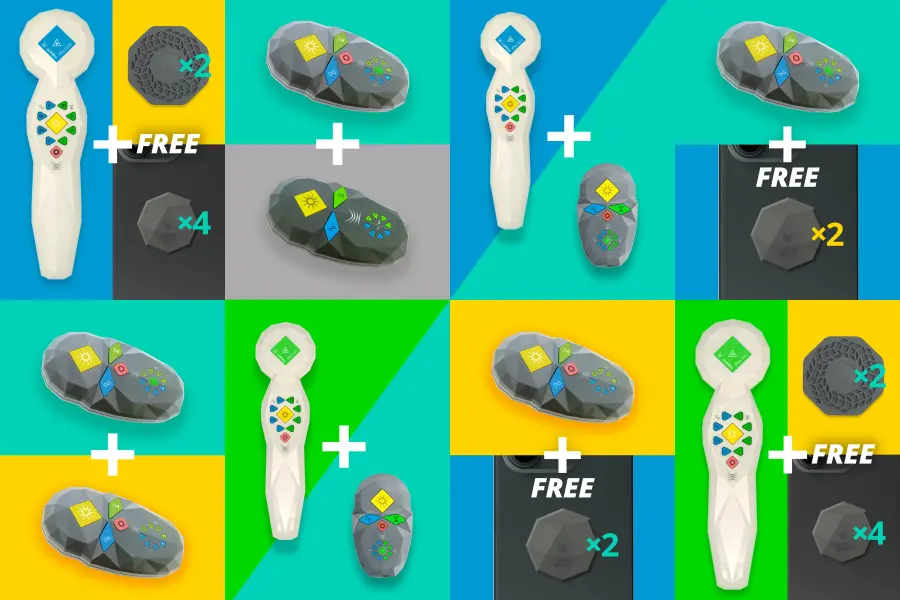
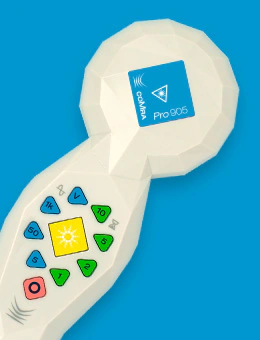
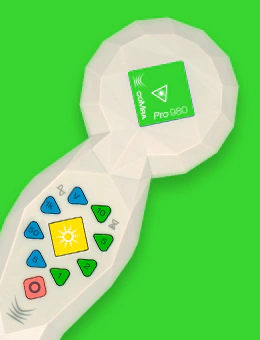
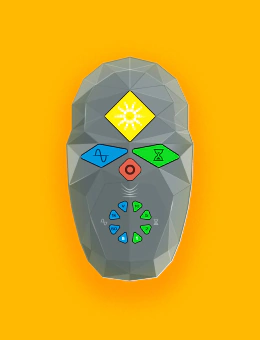
One device and the User Guide. For a clinic the 905 nm professional device is the usual choice: deeper penetration and more power mean shorter sessions and 2–3 visits a week rather than daily, which fits an appointment book far better. The portable Palm suits multi-bed layouts and moving between rooms, and it's also the device patients buy to keep treatment going at home between visits. With a very depleted patient, run the first course or two on a 980 nm device to rebuild resources, and move to the 905 nm device afterwards for more intensive work.
Not much, and no prior laser experience is assumed. A short orientation plus the User Guide is enough to start designing treatments – the Guide is the real resource, with more than 100 protocols for over 200 conditions, indexed by condition and body system, each with point diagrams, frequencies and exposure times, searchable in PDF, app or web form. Beyond that there are self-paced video modules, and the coMra Life platform, where practitioners with years of coMra behind them will happily talk a case through with you. Training and education are available for your staff and your clients as well, not only for you.
Give two timelines rather than one. Acute pain and a general lift in wellbeing usually show up in the first session, since ATP availability normalises within minutes, whereas chronic and structural cases run weeks to months because regeneration takes the time it takes. It helps to walk patients through the order things come back in – pain and energy first, organ function over days, regulation over weeks, tissue structure over months. Say up front, too, that with significant nerve or tissue damage the first relief may last only a few hours before pain returns: that's the normal pattern at that stage, not a failure, and not an analgesic wearing off.
coMra works the same way wherever you put it – restoring the cell's functional reserve rather than going after a named disease – so what varies is how quickly the tissue can put that to use. Quickest to respond: wounds, bruises, burns, peripheral pain, infections and inflammation. Joints, the brain, internal organs and whole body systems respond well but want more sustained work, while endocrine, autoimmune and skin conditions come round over a longer course. With hereditary and genetic disorders coMra makes life more comfortable rather than changing the condition itself.
No – there is nothing to titrate. The four radiances amplify each other, so each one runs at a low intensity inside a broad safe window – driving any of them harder gains nothing, and intensities that low can't do harm. Planning therefore comes down to two things: how long you treat and which points you treat, both taken from the protocol and then adjusted to how the patient responds. No dose calculations, no ramping up.
Most protocols run around 30 minutes, with the range going from 5 minutes for a small acute area up to 2 hours for a full multi-area treatment; the default is a minute per point. Setup is minimal – the device goes straight onto the skin over the points in the diagram, and precision isn't needed, since the beam spreads to cover the device's own footprint. You can stack protocols in one session, usually a systemic Universal treatment plus the local points for the condition. A portable device moves easily between rooms, or stays with one patient who runs it themselves once you've shown them how.
Yes – anyone on your team can, after a short briefing. The device is safe by design: there's no intensity to set wrong, nothing to overdose on, and reactions are extremely rare precisely because the intensities are so low. Each protocol states exactly which points to treat, for how long and at which frequency, so once you have chosen one, placing the device and running the session is straightforward. That leaves you free to carry on with your own therapy while treatments run in parallel – and the same holds for patients, who can keep going at home with their own device.