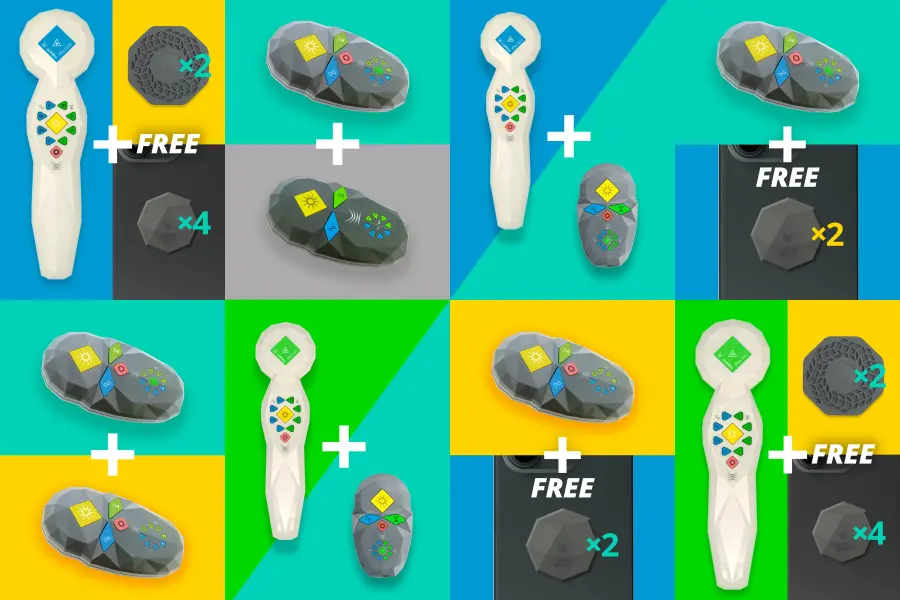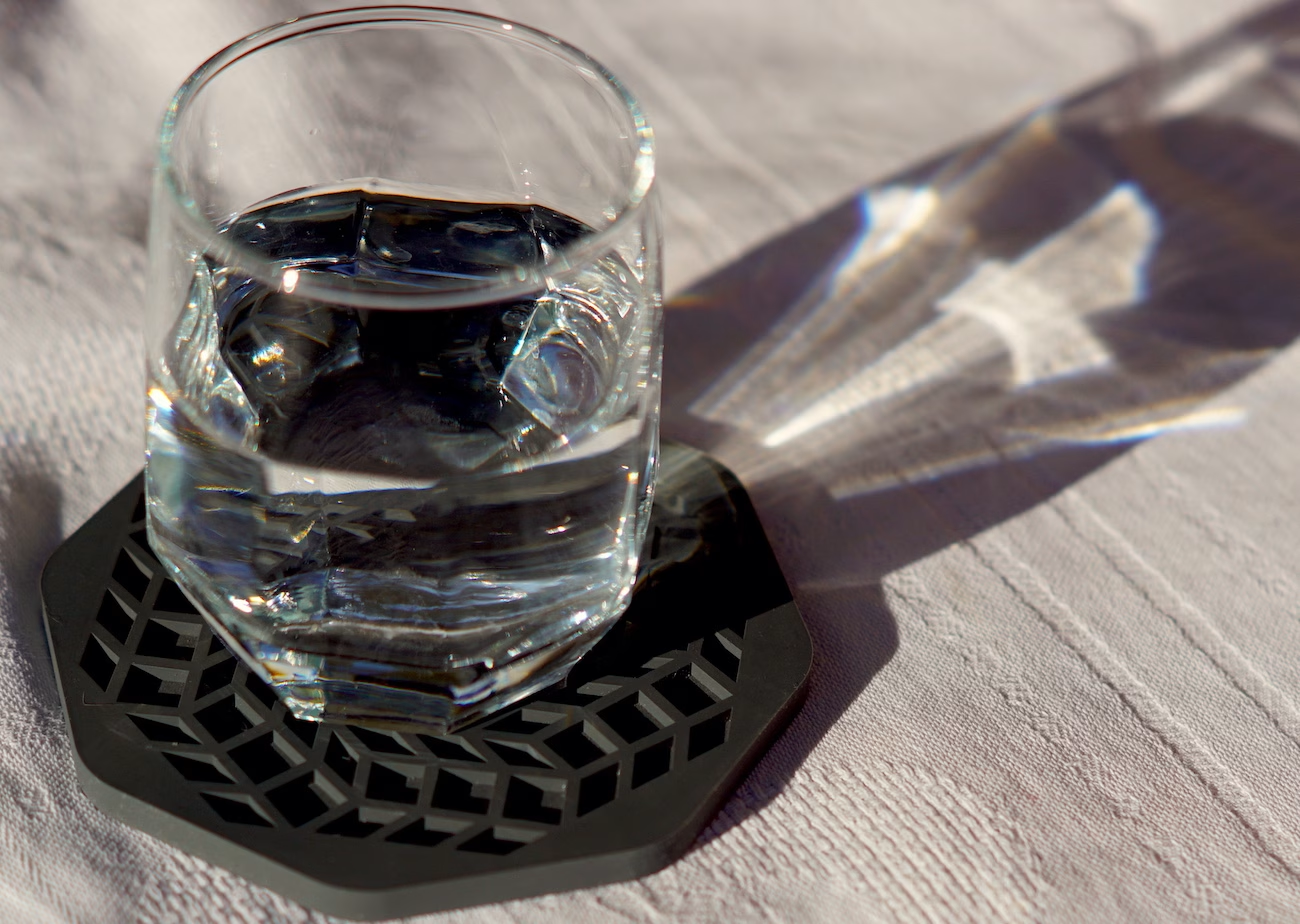
Yes – the device is placed directly on the skin. Clothing, bandages and casts distort the radiances, so treating through them wastes the session, and jewellery over the treatment area comes off for the same reason; hair and animal fur are the exception and need no shaving. Sensitive electronics such as laptops and hard drives stay more than 30 cm away, because the magnetic field can damage them. And since the device is held in position against the skin for the length of the session, coMra is used before or after driving, never while driving or operating machinery.
Both, and neither needs medical training. coMra was designed from the ground up for use outside a medical facility, so treating a family member is ordinary home use – infants and children are always treated by an adult, and in clinics trained assistants run protocols the practitioner has set. What makes this workable is the safety profile: with no titration and no overdose risk, handing the treatment to a non-specialist introduces no clinical risk. Learning to apply it is part of the benefit – self-care skill is one of the four functional reserves coMra addresses.
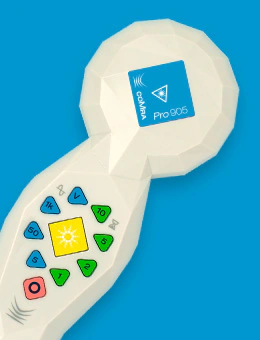
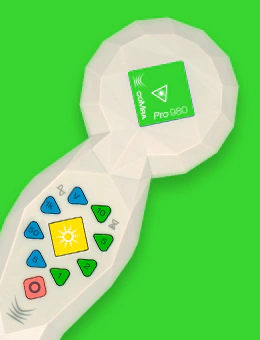
Yes – there is no upper age limit, and coMra is as safe for elderly people as it is during pregnancy and in acute conditions. The low individual intensities are precisely what makes it appropriate for people who would not tolerate a stronger intervention. Where the body is severely exhausted or a chronic disease is advanced, the approach is graduated rather than restricted: the first one or two courses are best done with a gentler 980 nm device (coMra Pro 980 or Palm 2) to rebuild resources, and the deeper-acting Pro 905 comes in only once that initial depletion has been overcome. What sets the pace is how depleted the body is, not age.
Yes – wounds, cuts and burns are among the fastest-responding applications there are. Broken skin, burns and superficial ulcers are treated at 1000 Hz, the least penetrating of the settings; larger wounds and infected sites use the variable setting. Dressings come off before treatment, since bandages distort the radiances, and for a plaster cast a hole the size of the device's treatment head is cut directly opposite the fracture. Where a hygienic barrier is needed, a single thin layer of transparent cling wrap is acceptable.
No – overdose is not a risk category for coMra. Each of the four radiances runs at an intensity lower than any of those modalities uses on its own, and the synergy between them keeps the device inside the stimulatory window of the biphasic dose response, so running longer or harder adds nothing. Extended treatment stays safe but becomes less effective: for an acute problem, three or four short sessions a day work better than one long one. The clinical variables are duration and treatment site, never intensity.
Yes – cancer is not a contraindication for coMra. The reason is the power profile: coMra's radiances are low-level and non-damaging by design, they do not damage DNA or any other part of a cell, and the fifty-year clinical record of low-level laser, magnetotherapy, ultrasound and photobiomodulation shows no carcinogenic effect. What coMra does here is what it does everywhere – support functional reserve, ease pain, and help sleep and digestion, including in palliative and end-of-life care. It does not treat the tumour.
Yes. coMra can be combined safely with pharmacological treatment – it has no chemical action of its own to interact with a drug, and it is used equally in the run-up to and aftermath of surgical and pharmacological interventions. Because it improves cellular energy metabolism, medication tends to work better alongside it, and as healing progresses the need for symptom management often falls away naturally. Any reduction in dose follows the improvement rather than preceding it.
No. coMra's magnetic field is a weak permanent static field – not strong enough to move an implant or to heat metal – so plates, screws, stents and artificial joints interact safely with treatment. An artificial joint is in fact a good reason for preventive use: where a structural deficit is expected to worsen over time, 3–5 treatment courses a year are recommended. Rings and other jewellery do come off before treating the hands or neck, because metal on the skin surface reflects and distorts the radiances.
Yes, subject to one firm distance rule: the device never comes within 30 cm of the heart or of the pacemaker, because the device's static magnetic field can interfere with the implant's electronics. The same 30 cm rule applies to an implanted neurostimulator. Outside that radius, treatment proceeds normally. Independently of implants, the heart area itself is only ever treated at 5 Hz, and any session that includes the head or heart is followed by 5–10 minutes of rest.
The eye area can be treated, but laser light must never come into contact with an open eye – this is the one hard rule of coMra use. The 905 nm and 980 nm laser light is infrared and therefore invisible: brief exposure can cause serious damage and prolonged exposure permanent blindness, so the eyelids are closed for any treatment near the eye. Keep them closed for the coloured LED light too – it is harmless, but irritating at that distance – and the 5 Hz deep-penetration setting is not used on the eye area.