






 coMra user guides


 Articles


 Testimonials
 Case studies
 Podcasts




 Customer services
 User support
 Schedule a call
 Chat with us

 My last searches
 Popular searches

More and more women each day discover that their hormones are out of balance. Is it because of the modern lifestyle, or the foods that we eat? Is it the distress that has become a normal part of our days? Low progesterone, high estrogen, thyroid issues and diabetes are all types of hormonal imbalance. What foods do we have to eat, and what do we have to avoid, if our progesterone is low? This precious hormone regulates a woman’s monthly cycle and her pregnancy, and it is essential for the conception of a healthy baby.
This guide covers the foods and herbs that lower progesterone – the ones to avoid when your own levels are low – along with the everyday factors that push it down, and how to support your body back into balance.
Which foods and herbs lower progesterone – the short answer
These are the things that bring progesterone down. If your progesterone is already low, they are what to cut back on:
- Phytoestrogen foods – soy products, flaxseed, sesame, legumes, dried fruit – which raise estrogen and so shift the balance away from progesterone.
- Progesterone-blocking herbs such as turmeric, thyme, oregano, sage and liquorice.
- Chronic stress, which drives cortisol and pushes progesterone down the body’s list of priorities.
- A loaded liver, which cannot clear excess estrogen efficiently.
- Refined sugar, which fuels insulin spikes and hormonal swings.
The rest of this article explains each of these.
Foods to lower Progesterone
Some foods contain phytoestrogens which mimic the estrogen and disturb its proper elimination from the body. As a result, the levels of estrogen in the body increase. One of the main causes of low progesterone is estrogen dominance. This goes two ways, and often women find themselves in a vicious circle trying to control the excessive amount of estrogen. Therefore, one way to control estrogen is by avoiding certain foods which are known to lower progesterone levels.
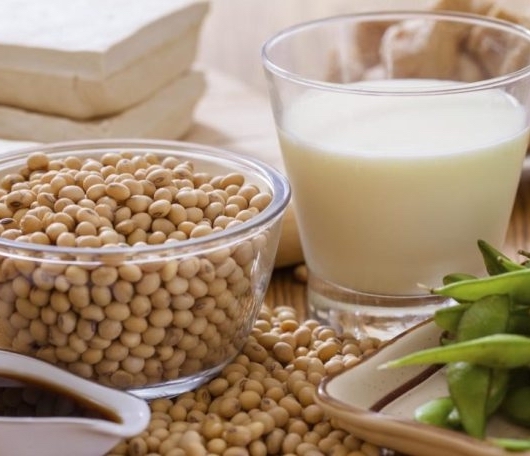
- Soy. Soy products contain a great amount of phytoestrogens. If you have health issues due to low progesterone, you need to avoid soybeans, edamame, tofu, soy milk and soy sauce. Fermented soy such as tempeh, in extremely limited quantities, is the gentler exception.
- Flax seeds are also rich in phytoestrogens, so eat them sparingly rather than every day. Flax seed oil, however, is rich in omega-3 fatty acids and does not promote estrogen production – it reduces inflammation and is greatly beneficial for your heart and skin.
- Sesame seeds are similar to flax seeds, containing a very high percentage of lignans, a kind of phytoestrogen. Whole seeds pass through undigested, so what to avoid mainly is sesame flour and tahini.
- Chickpeas, beans, peas and lentils can be great for some people, but they also decrease progesterone. Consume them in very limited amounts, especially if you experience bloating and heaviness after eating them. Boiled chickpeas, as in hummus, contain almost 1 mg of phytoestrogens per 100 g.
- Yucca (also known as cassava or mandioca) is a very popular root in some countries for its nutritional value, but it will make your progesterone even lower, so you need to avoid it too.
- Gluten. Make an elimination test for gluten: if your body reacts with headaches, bloating and tiredness, the best solution is to exclude it from your diet. It is also a huge trigger for hypothyroidism, so even if you are tolerant to it, try to avoid it as much as possible, given the number of chemicals used in growing it.
- Fennel is a very popular vegetable used in many recipes, both sweet and savoury. It also contains high levels of phytoestrogens, so you need to minimise its consumption.
- Animal products with hormones. Sadly, most of the meat, fish, eggs and dairy on the market are treated with growth hormones – and the hormone that regulates and promotes the growth of cells is estrogen. That is why nutritionists recommend grass-fed meat, wild-caught fish, organic eggs and bio dairy. If you cannot source those, limit animal products, and chicken most of all: chickens these days are fully grown in 5 weeks because of the hormones added to their food, and those hormones remain in the meat.
- Alfalfa sprouts are another superfood used to boost estrogen levels, so if your progesterone is too low, you need to avoid them.
- Dried fruits like apricots, dates and prunes contain higher amounts of phytoestrogens than their fresh varieties. Eat them fresh in limited amounts and avoid the dried forms – dried apricots contain almost half the amount of phytoestrogens found in chickpeas.
Herbs and roots that block progesterone production
Some herbs and roots are progesterone inhibitors and they interfere with the progesterone receptors in your body. So you have to minimise their intake, whether as herb infusions, supplements or seasoning:
- Turmeric is one of the superfoods, very healthy and with great qualities, but it is still one of the foods that decrease progesterone levels. Curcumin is its active component, and consuming it very often can lead to irregular periods and lacking ovulation.
- Thyme
- Liquorice
- Oregano
- Bloodroot
- Sage
These are sometimes called progesterone blockers. Cut them from your diet if you want the quantities of this hormone to increase. On the other hand, there are foods and herbs that help you raise your progesterone, and you need to bring those in: find out which foods and herbs increase progesterone.
Sugar is not your friend
One of the foods that decrease your progesterone is the sugar hidden in all the sweets, processed foods and “fast” carbohydrates. Sugar intake causes insulin spikes in your blood, and the process of regulating blood sugar costs the body too many resources, causing hormonal imbalances like diabetes and autoimmune diseases. Sugar also feeds the bad bacteria in your intestines and elsewhere in the body, such as Candida. If you experience sugar cravings, it means your body needs magnesium – yet digesting refined sugar depletes your body of magnesium further. So if you crave chocolate during your PMS, choose a dark one with minimum sugar, or eat raw nuts like almonds and walnuts, which contain magnesium and good fats. Sugar is also linked to premature ageing and to the breakage of collagen, which results in saggy skin and leaky gut syndrome.
Why is my progesterone low? Stress, liver and estrogen dominance
So many women are experiencing hormonal imbalance and still do not know the cause of it. Low progesterone, estrogen dominance and thyroid issues are all connected – one causes the other, in a vicious circle that seems to have no end. Two factors sit behind most of it: chronic stress and liver malfunction.
Are you trying to keep up with everything?
Career, children, projects, household, friends… the life of the modern woman is so busy that it often looks hectic and stressful. Trying to keep up with everything may leave you with the feeling that there is always something not done on time. When a woman does not create space for herself to rest, she becomes too active – always busy, always in a rush. Adrenaline and cortisol are constantly high, and the production of progesterone is not a priority. The monthly cycle is there to remind her that there is a time to be active, and it has to be balanced with time for rest. Developing too many male qualities is not in service of the woman; in her life, everything has to be in moderation, and her inner balance needs care and attention.
Does stress cause low progesterone?
Yes – directly and powerfully. Too much stress causes distress, which is a constant production of cortisol in your body. Producing a hormone takes energy, so the body prioritises cortisol and cuts off the progesterone that is needed for reproduction. On top of that, there are so many ways for estrogen to get higher – meat with hormones, hormone replacement therapy, and plastic, which is full of xenoestrogens that mimic the estrogen produced in the body.
How does the body eliminate the excess of estrogen?
Very high levels of estrogen lead to estrogen dominance and very low levels of progesterone – but which organ is responsible for clearing the excess? The answer is the liver. If the liver is not working properly, the excess estrogen cannot be eliminated and starts to cause trouble in the body. The main trouble is that estrogen causes tissues to grow, so it can cause PCOS and even breast cancer. That is why you need to focus on avoiding all the substances – alcohol, caffeine, food preservatives – which load the liver with even more work. Your body also needs energy to recover and to heal, so a great way to support your liver is with cold lasers. I shared in another article how I started applying coMra daily for two months after I found out that my estrogen levels were too high.
Which are the signs and symptoms of low progesterone?
Many women suffer from low levels of progesterone, an important reproductive hormone. It signals the uterus to thicken its walls in preparation for pregnancy; if there is no fertilisation, the levels drop and the menstrual cycle begins. Low progesterone disrupts the hormonal balance in the body and often leads to estrogen dominance. If you experience any of the following, your progesterone production might not be sufficient:
- premenstrual syndrome (PMS)
- headaches
- weight gain
- sleeping disorders
- anxiety and mood swings
- infertility, no periods or irregular periods
Progesterone also increases the activity of the thyroid gland, and its deficiency is linked to hypothyroidism and Hashimoto’s disease. The factors affecting its production range from exposure to toxins, stress and high levels of estrogen to the foods and herbs above.
Is there a safe and effective way to heal hormonal imbalance?
You do not need synthetic hormones, which will deepen the imbalance. In fact, if your body has available energy, it will use it for healing and regeneration. Low-level lasers are very gentle but powerful at the same time: as a cold laser therapy, coMra works at the level of the cell, providing energy in the form of light. Used on its own, coMra is very effective in restoring overall health, and combined with diet and lifestyle changes it can be even more beneficial. Low-level laser therapy shows great results, and medications can be avoided along with all their side effects. So there is a way to restore this extremely precise balance in the body without any hormones, chemicals or other aggressive substances – and maybe you should give it a try.
Where to start from with this method of healing?
To start using coMra, first search your health issue in the coMra User Guide. If you can find it, start applying the treatment protocol. If you do not find it, start with coMra Universal Treatment 5, which is recommended when dealing with emotional stress as it helps your nervous system calm down, relax and regenerate. The coMra treatments in the Gynaecology section can be applied in cases of menstrual cycle disturbances, some forms of sterility, pelvic pain and more. This is a very gentle and non-invasive way to induce the inner healing abilities of your body, supporting it to restore its natural balance and health.
Can I apply this therapy at home?
The procedure itself is very pleasant – there is no burning or any other sensation while the device is on your skin. After a week or two of daily treatments, you will start seeing improvement. Every case is different, and how long it takes for your body to recover depends on your health condition right now. Overall, hundreds of people have achieved great health results with coMra, even in serious cases like diabetes, chronic illnesses and thyroid issues. In addition, coMra can be used for pain relief, as a great prevention method, and any time you need to induce the healing abilities of your body.
If you’d like the wider picture on supporting the body’s own resilience, see our Health & Prevention hub.
Frequently asked questions
What foods lower progesterone?
Foods high in phytoestrogens are the main ones – soy, flaxseed, sesame seeds, legumes (chickpeas, beans, lentils), fennel, alfalfa sprouts and dried fruit, along with gluten and hormone-treated animal products. They raise estrogen and so shift the balance away from progesterone. If your own progesterone is low, these are the foods to cut back on.
Which herbs lower progesterone?
Turmeric, thyme, oregano, sage, liquorice and bloodroot are progesterone blockers – they interfere with the progesterone receptors in the body. Because herbs act more strongly than foods, cut them from your diet if you want your progesterone to increase.
Does stress lower progesterone?
Yes. Chronic stress keeps cortisol high, and the body prioritises cortisol over reproductive hormones, cutting off the progesterone needed for reproduction. Creating space to rest is one of the most effective things you can do for your hormonal balance.
How long does it take to change progesterone levels through diet?
Hormones respond over weeks to a few cycles, not days, because they follow the body’s own rhythms.
Watch: real experiences with coMra therapy
In this webinar we cover the mystery and the potential in the female menstrual cycle, and how to work with that knowledge in order to heal the imbalances. The hormones of a woman are the foundation of her overall health:
Prefer to read? The full transcript and summary are on the video page: The secret of the menstrual cycle.
In the following video find out more on how coMra helped a woman with different conditions like pain, ovarian cyst, sleep problems, constipation and excessive bleeding during monthly period:
Read the transcript and summary instead: Painful bilateral ovarian cysts.
If you are reading this article because you want to get pregnant soon but your progesterone levels are too low, we feel you. And we really want you to experience the joy of having a baby. We have good news for you – coMra therapy can be used by pregnant women and is safe for their babies as well. Below you can watch a short video on how coMra is used before and after birth.
Natasha Stadler has been a midwife for 30 years, and an independent midwife for 13 of those years. She was introduced to coMra therapy 7 years ago and has found it to be an invaluable tool for her clients.
Read Natasha’s account instead: the full transcript and summary.
Natasha’s full account – sutures healing in 3 to 5 days, breastfeeding challenges, postpartum recovery – is in our article on coMra therapy for pregnancy and birth.
Watch another story shared with an open heart and a smile:
Meret has been using coMra therapy for many years. As many other coMra users, she found that coMra therapy is not only very safe but also that coMra is effective for various cases and conditions. She used it for her daughter’s herpes, her own thyroid issues and migraines with great results.
Prefer to read? Here is Meret’s story in full, with transcript and summary.