Unlocking the Secrets of Fascia: A Conversation with Garry Lineham
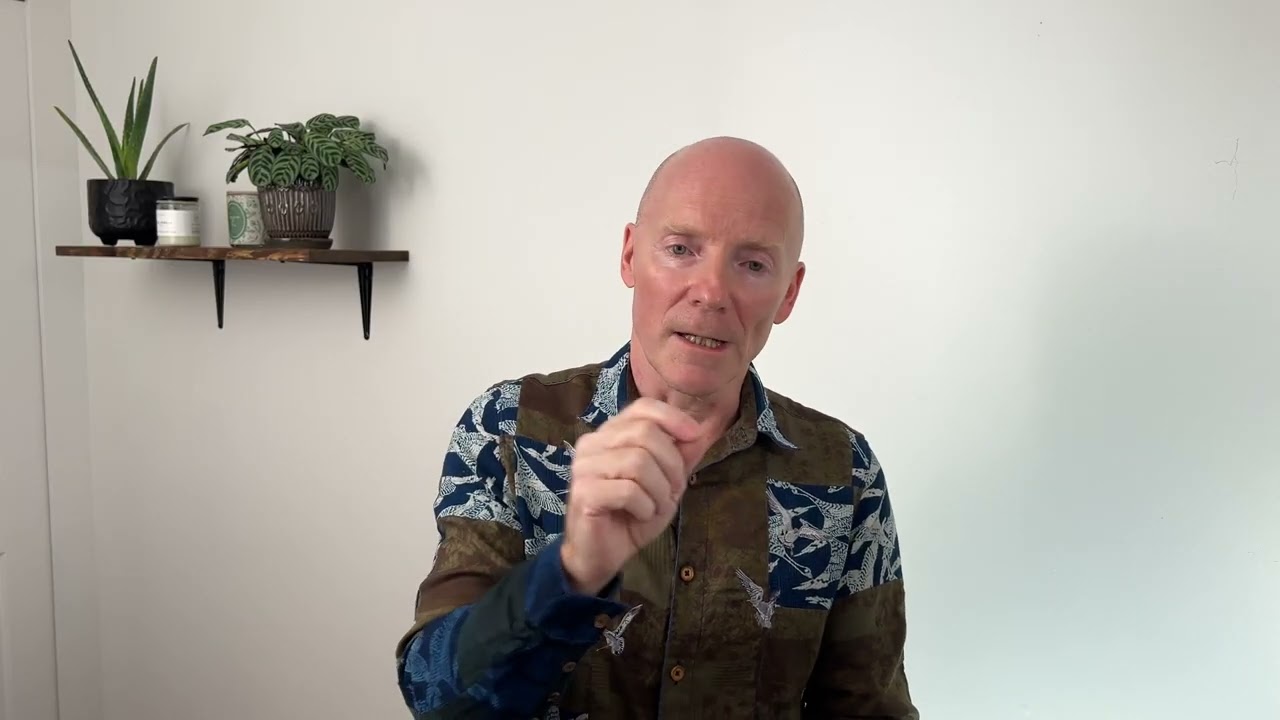
In this episode of the Healing with Coherence podcast, host Mel sits down with Garry Lineham, the co-inventor of fascial maneuvers and co-founder of Human Garage. Recorded on location at the St. Katarina Resort in the Czech Republic, this discussion explores the transformative power of the human body, the nature of fascia, and the shift from traditional healing to peak human performance.
The Discovery of Fascial Maneuvers
Garry Lineham’s journey into health began with his own struggle. After a career as a bodybuilder ended following a 600-pound squat injury, he spent years and millions of dollars seeking relief from chronic pain through various medical practitioners. When those traditional routes failed, he began to treat his body like a complex computer system, applying his background in problem-solving and encryption software to "debug" the human body.
The breakthrough occurred in 2018. While sitting and manually torquing the skin around his joints, Lineham discovered that he could trigger a release in his lower back that years of chiropractic and bodywork had failed to resolve. He spent the following months mapping these movements to every joint in the body. During the 2020 pandemic, when he could no longer access clinical care, he refined these techniques into a structured sequence of "fascial maneuvers." Within three months, he was not only pain-free but performing at a higher level than ever before.
Redefining the Human Body
Lineham challenges the conventional medical view that bones provide the primary structure of the body. He points out that, aside from the teeth, rib cage, and ears, bones do not actually touch. Instead, he argues that fascia – the connective tissue – is the true structural framework.
Furthermore, Lineham questions the traditional hierarchy of the brain as the body’s "master computer." He notes that while the brain has 100 billion nerve endings, the fascia possesses 100 trillion, suggesting that the fascia acts as a liquid crystal that transmits signals from an external intelligence. He posits that the brain’s primary role is to interpret these signals and protect the body, rather than to act as the sole source of human consciousness or movement.
From Healing to Performance
The Human Garage organization began in a garage in Venice, California, where Lineham and his partners worked with high-profile athletes and celebrities. They treated thousands of patients, experimenting with various modalities, lab work, and genetic testing.
As they observed the results, the team noticed a shift: when they successfully released restrictions in the body, secondary issues like anxiety, stress, and depression often resolved alongside physical pain. This led to a fundamental change in their mission. Lineham explains that his focus has moved from "healing" – which implies a state of brokenness – to "performance." He believes that people are more motivated by the desire to thrive and perform in their daily lives than by the clinical pursuit of fixing a pathology.
A Mission of Empowerment
A cornerstone of the Human Garage philosophy is that health should be accessible to everyone. Consequently, all fascial maneuvers are offered for free. The organization’s mission is to empower one billion people to take their health into their own hands.
Lineham emphasizes that one does not need years of formal medical training to facilitate this process. By experiencing the maneuvers personally, individuals gain the genuine, lived experience required to help others. Today, a global community of over 20 million people uses these techniques, with thousands of volunteers and coaches helping others navigate their own paths to self-sufficiency.
As Lineham concludes, the future of health lies in moving away from the "expert-dependent" model and toward a deeper understanding of the body’s innate ability to regulate itself, perform at its peak, and connect with the broader intelligence of the human experience.
The Shift Toward Self-Sufficiency
The global system being built is rooted in the principle of people helping people through genuine, lived experience. This approach effectively dismantles the traditional, expert-dependent model. Society has long been conditioned to believe that for any health challenge, one must defer to an "expert" because they are supposedly incapable of managing their own well-being. In reality, true self-sufficiency comes from taking an experience – a challenge or a hurdle – and navigating it until it becomes one’s own personal victory.
Consider the analogy of learning to ski: one can study the dynamics of weight shifting, how the edge cuts into the snow, and the mechanics of the boots, but without ever stepping onto the slopes, one cannot be an expert. Academic education alone does not confer expertise; true mastery is born from the personal resolution of an issue. Etymologically, the term "expert" is often humorously deconstructed as a "has-been drip under pressure." While lighthearted, the point remains: true wisdom is found in the ability to empathize because one has walked the path themselves.
This realization led to a shift in perspective regarding the practitioner-patient relationship. There is a profound disconnection in modern medicine when a practitioner cannot relate to the patient’s experience. Compassion and empathy are the new frontiers of healing; they require a practitioner to acknowledge, "I may not have your exact pain, but I know how that feels." This middle ground – between being detached and being overly enmeshed – is where genuine healing occurs, fueled by love and caring.
Fascia, Emotion, and the Body as a Computer
The relationship between fascia and emotion is central to understanding human movement. The brain does not initiate movement in a vacuum; it requires a desire, which is an emotional state. Emotion precedes motion. If the body is viewed as a computer, the brain acts as the processor (the CPU), while the body’s tissues serve as the hard drive.
Fascia is designed to receive and process energy, but when it becomes dehydrated or restricted, it traps that energy. When we move the fascia in the way it was intended to be moved, we release that stored "energy-emotion." By moving the stuck tissue, we effectively clear the "hard drive" of the body, allowing the stored emotion to surface and resolve.
When a practitioner touches the body, they create a sensation. The brain then evaluates this sensation: Is it safe? Do I like it? This judgment triggers a cascade of chemical responses – serotonin and dopamine for positive associations, or adrenaline for negative ones. By applying specific frequencies through touch and intent, a practitioner can help the body regulate these responses, moving the nervous system from a state of "freaking out" to one of safety and relaxation. This is a form of channeling – not in a mystical sense, but in the active, conscious direction of the energy one generates within oneself.
Nature, Performance, and the Myth of Restriction
For those practicing these techniques, nature is the ultimate healing environment. Whether it is the medieval waters of a historic resort or the simple act of being barefoot on the earth, nature provides the best mechanism for detox and recovery.
A common misconception in the fitness world is the necessity of heavy weightlifting to build strength. However, true performance is often hindered by restriction. By removing the restrictions within the fascia and joints, one can achieve greater range of motion and power while using fewer resources. A bodybuilder may carry significant muscle mass, but if that muscle is restricted, it requires more energy to move. When the body is free of restriction, it functions with greater efficiency and ease. The goal is not to "hack" the body with constant external inputs, but to create an environment where the body can perform at its highest potential naturally.
The Future of Health: Performance Over Healing
The primary misconception in modern health is the belief that we require something external to make us healthy. The human body is a dynamic, self-regulating machine. When the goal is simply to "heal," people often plateau at 80% of their potential. However, when the goal is to "perform," healing occurs as a natural byproduct.
As the world moves toward this understanding, the focus shifts away from the fear-based, expert-dependent model. We are seeing a transition where individuals are taking responsibility for their own health, supported by a community of peers. True longevity is not about the external appearance of youth or the pursuit of expensive, technology-heavy protocols; it is about the longevity of the spirit. It is the ability to move naturally, to be present in the moment, and to feel the youthful spark that resides within. Ultimately, feeling younger is what truly makes one look younger, and that is a state of being that begins from within.
The Quest for Simplicity and Natural Healing
Garry Lineham shares a profound shift in his personal journey, moving away from a technology-centric lifestyle toward a minimalist existence. He describes a life where his essential belongings fit into a single backpack, emphasizing that as he removes unnecessary technology and material burdens, his quality of life has improved. He views himself as an explorer and adventurer, moving toward a future where he believes humanity will eventually gravitate – a state of being defined by simplicity and connection.
Water Technology and Cellular Health
During the discussion, Lineham introduces the specific technologies he incorporates into his routine, focusing primarily on water and cellular support. He highlights the importance of the "fourth phase of water" and the use of hydrogen-based technologies.
He explains the function of the Nano V, which assists in addressing protein folding issues. When a cell struggles to produce proteins for growth and repair, the proteins may fold incorrectly, leading to cellular collapse and damage. Lineham notes that while this is not a "cure" for disease, it helps remove the underlying cellular stressors that prevent the body from healing itself. Complementing this, he utilizes hydrogen gas generators, such as the Tech Pro 900, to scavenge hydroxy free radicals. By eliminating these radicals, the body can better manage oxidative stress, which is a primary driver of aging and cellular degradation.
The Emotional Roots of Disease
Lineham posits that the concept of "healthcare" is often disingenuous, as it has shifted from community-based care to a centralized, institutionalized model. He argues that true health involves caring for oneself and helping others do the same.
Central to his philosophy is the understanding that disease is often an expression of the body being "not at ease." He explains that fear, stress, and the resulting chemical cascade – including adrenaline, norepinephrine, and cortisol – inhibit digestion and create toxicity. Over time, this state of being "not at ease" manifests as measurable disease. Lineham suggests that even in cases of genetic predisposition, the body requires a stressor to trigger the mutation. By removing stress and creating an environment where the body can thrive, the body is empowered to perform its natural self-healing functions.
The Future of Fascial Maneuvers
Discussing the future of his work, Lineham describes the fascial maneuvers as a philosophy of movement rather than a rigid set of exercises. Because the philosophy is adaptable, it is being integrated into diverse fields, including professional sports, trauma relief, and educational programs. He envisions a future where millions of people utilize these movements to reclaim their physical autonomy.
To support this, Human Garage offers a 28-day reset program, which serves as a foundational "door opener" for individuals to learn the language of their own fascia. The program is designed to be accessible, requiring only 30 to 40 minutes a day, and includes education on intent, meditation, and specific maneuvers. For those wishing to go deeper, the organization provides advanced training for practitioners and coaches, fostering a global community of individuals – from medical doctors to parents – who are dedicated to self-healing.
A Personal Transformation
Reflecting on his own experience during his visit, Lineham notes the tangible benefits of the protocols he has undergone. After experiencing the combined effects of the fascial maneuvers, specialized water, and nutritional support, he reports feeling a heightened sense of mental clarity, focus, and physical lightness. He notes that his speech has become more fluid and his skin appears more vibrant.
As the conversation concludes, Lineham and his host emphasize that this exchange is merely the beginning of a broader movement. By sparking interest in these self-healing modalities within the Czech Republic and beyond, they hope to encourage others to take responsibility for their own health and rediscover the innate capacity of the human body to heal.


 coMra user guides


 Articles

 Testimonials
 Case studies
 Podcasts



 Customer services
 User support
 Schedule a call
 Chat with us

 My last searches
 Popular searches