Clinical Experience and Practical Protocols for Treating Trigeminal Neuralgia: Part 2
This article continues our exploration of trigeminal neuralgia and neuropathy treatment using coMra therapy. Following our initial webinar on November 1st, this session focuses on the practical application of coMra therapy, drawing from years of clinical experience at the "Technology of Life" center in Altai, South Siberia.
The Clinical Perspective: Dr. Anna Surazakova
Dr. Anna Surazakova, a medical doctor specializing in rehabilitation and restorative medicine, serves as the CEO of the "Technology of Life" clinic. Since 2017, she has integrated coMra therapy into her practice, transitioning from traditional clinical settings to empowering patients to manage their own health at home.
In restorative medicine, the goal is to recover the individual as a whole person. Dr. Surazakova emphasizes three fundamental pillars of this process: 1. Restoration of function: Supporting the body’s tissues and organs to restart suspended or delayed regeneration. 2. Systemic restoration: Building the body’s functional reserves to improve resilience against future illness. 3. Psychological and emotional alignment: Addressing the patient’s relationship with themselves and their environment, as chronic disease often leads to social withdrawal and stagnation.
Dr. Surazakova highlights coMra therapy as a versatile, safe, and effective tool that integrates seamlessly with other therapies, including medication, massage, and therapeutic exercise. Because coMra devices are safe and user-friendly, they do not require specialized clinical environments, making them ideal for home use.
Clinical Case Studies
Dr. Surazakova presented several cases demonstrating the efficacy of coMra therapy across varying durations of illness:
* Acute Trigeminal Neuralgia: A 60-year-old female with one week of symptoms achieved complete relief after 10 sessions using the Delta 980, following the Neurology 4 and Universal 7 protocols. * Chronic Trigeminal Neuralgia: A 52-year-old female with a two-year history of pain triggered by movement and stress saw her symptoms disappear after nine sessions in the clinic, followed by three days of home treatment. * Complicated Neuralgia: A 65-year-old male with 15 years of pain exacerbated by dental issues was able to undergo necessary dental procedures pain-free after four coMra sessions. * Diabetes-Related Neuropathy: A 68-year-old female with multiple comorbidities, including diabetes, experienced significant relief after 11 sessions, proving that even complex, long-standing cases can respond positively to systemic support (Universal 3) combined with targeted protocols. * Pediatric Neuropathy: A five-year-old boy with facial twitching and drooping showed immediate improvement after the first session. After three days of home treatment, symptoms resolved completely, avoiding the need for invasive diagnostic testing. * Chronic Facial and Trigeminal Neuropathy: A 79-year-old female with 20 years of symptoms achieved a long-lasting, pain-free state after a continuous course of 24 treatments, demonstrating the importance of persistence in chronic cases. * Bell’s Palsy: A 66-year-old male treated during the acute phase of Bell’s Palsy saw 80% recovery of facial muscle movement by the time of discharge. When symptoms recurred months later, a second course of treatment successfully restored full symmetry and function.
Key Takeaways for Patients
Dr. Surazakova stresses that the nervous system has an inherent capacity to regenerate, but it requires time and consistent support. When symptoms reappear, it is a signal that the body’s functional reserves are depleted and that further coMra therapy is needed to prevent the condition from becoming chronic.
Arzhan Surazakov, co-founder of the clinic, reinforces this: while short-term results can be achieved quickly, patients with chronic conditions should view coMra therapy as a long-term commitment to their health. By transitioning to home-based treatment, patients take an active role in their recovery, which often leads to the best clinical outcomes.
Practical Application: Garrett Murrin
Garrett Murrin, Regional Manager for North America, emphasizes the practical "nuts and bolts" of treatment. He notes that successful treatment involves understanding both local protocols (addressing the specific site of pain) and systemic protocols (supporting the body as a whole).
Whether using the coMra Delta or the coMra Palm, the goal is to provide the body with the coherent light and magnetic energy it needs to facilitate its own healing. Patients are encouraged to study their specific protocols, remain consistent, and view the treatment process as an active partnership between themselves and the technology.
For those seeking to review the specific protocols mentioned, such as Neurology 3, 4, or Universal 3, please refer to the official coMra user guide or the recorded webinar series available on our YouTube channel.
Understanding coMra Devices and Treatment Application
When addressing facial sensitivity, such as that experienced with trigeminal neuralgia, it is important to note that the skin may be too sensitive for direct contact. In such cases, the device can be held just off the skin. During facial treatments, your eyes should remain closed; because coMra therapy utilizes specific light and magnetic radiances, no special safety glasses are required.
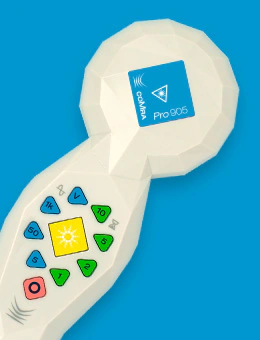
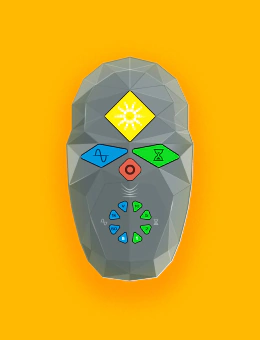
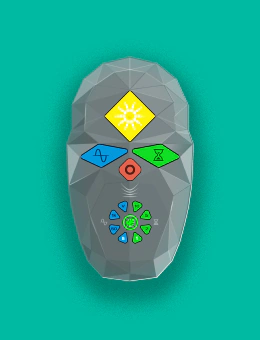
The coMra device interface is designed for simplicity, featuring a straightforward toggle switch and button configuration. Whether you are using the coMra Delta or the coMra Palm, the goal is to make regenerative therapy accessible for home use. The coMra Delta – specifically the "Pro" model – is recommended for severe, long-standing chronic conditions, while the coMra Palm is ideal for general, less acute issues.
When operating the device, you will notice several components: the central infrared laser, the surrounding color LEDs and magnetic field, and, on the coMra Delta, the four gray circles representing the ultrasound emitters. These radiances work together to penetrate the tissue. Treatments involve either "stationary" points, where the device is held in one spot, or "scanning," where the device is moved slowly over the area. When scanning, keep your movements deliberate and slow; you may choose to keep your head stationary while moving your arm, or vice versa.
For those requiring treatment inside the mouth, the coMra Delta allows for the attachment of a probe terminal, which can be swapped with the standard medical terminal. While the initial learning curve might feel significant, the operation of these devices quickly becomes second nature. It is recommended to integrate the therapy into your life step-by-step rather than forcing the process.
Local Treatment: Targeting the Trigeminal Nerve
Effective local treatment requires an understanding of the nerve’s anatomy. The trigeminal nerve originates in the brainstem (the pons/midbrain) and travels through the skull via the ganglion before branching out into the jaw, cheek, and forehead.
To treat this, we apply the device to the side of the head, allowing the radiances to penetrate the skull and reach the nerve root and ganglion. This supports the body’s natural capacity for nerve regeneration. For Neurology 4, the protocol involves scanning both sides of the face for approximately 10 minutes per side at 50 Hz. You do not need to follow a rigid pattern; the objective is to ensure the nerve projections in the skin are covered.
Additionally, we supplement this with Neurology 4A, which targets the brainstem and nerve root area. By placing the device just behind, in front of, and below the ear, you can effectively reach these deeper structures. Remember, you do not need to be pinpoint-accurate; the radiances naturally disperse as they enter the tissue.
Systemic Support: The Role of Universal Treatments
Local treatment is most effective when paired with systemic support. Universal 3, for instance, addresses the blood and lymph systems. Because blood is central to nutrient delivery and toxin removal, maintaining its health is vital for any regenerative process. By treating arterial points – such as those in the neck, armpits, and groin – you support the entire body’s circulatory and immune functions. If treating the femoral arteries is inconvenient, the arterial points behind the knees serve as an effective substitute.
Universal 5 is another essential protocol, designed to mitigate the effects of "harmful stress." Chronic pain often traps the body in a "fight or flight" state, which inhibits healing. This protocol helps shift the body into a "rest and digest" state, which is the optimal environment for regeneration.
Furthermore, treating the spinal cord is crucial as it acts as a primary mediator for the central nervous system and the flow of cerebrospinal fluid. Similarly, treating the liver and spleen supports detoxification and immune function, ensuring that the body can effectively eliminate toxins and process nutrients or medications.
Developing a Consistent Treatment Strategy
When building your treatment schedule, consistency is key. A typical conservative starting point might involve:
* Monday, Wednesday, Friday (AM): Universal 3 (Blood) followed by Neurology 4 (Nerve projections). * Monday, Wednesday, Friday (PM): Spinal cord treatment and Neurology 4A (Nerve root/brainstem). * Tuesday, Thursday, Saturday: Universal 5 (Stress reduction) and Neurology 4/4A. * Sunday: A scheduled rest day to allow for flexibility.
You may choose to break these sessions into smaller segments throughout the day to suit your lifestyle. Whether you are using the coMra user guide, the official app, or the recorded webinar series, the goal is to move from a structured starting point toward an intuitive partnership with the technology. By fitting the protocol into your life – rather than forcing your life to fit the protocol – you become an active participant in your own healing journey.
Managing Acute Attacks and the Healing Journey
When dealing with an acute attack of trigeminal neuralgia, the primary goal is to provide relief without over-stimulating an already aggravated area. During a flare-up, the affected tissue is often hypersensitive and incapacitated by pain. The natural tendency is to hold the coMra device on the site until the pain subsides, but this can be counterproductive. Applying too much energy to an aggravated point may exacerbate the inflammation.
Instead, adopt a strategy of short-duration treatments. Apply the coMra device for approximately one minute, then turn it off. While the desire for instant relief is understandable, it is more effective to wait 15 to 20 minutes before performing another short treatment. This approach allows the nerve and surrounding tissue to relax gradually rather than being overwhelmed by excessive stimulation.
Understanding the Pattern of Improvement and Relapse
In severe chronic conditions, the healing process is rarely a straight line. It is common to experience a cycle of improvement followed by a relapse. However, as you continue with your coMra therapy protocols, you will notice that the severity of each subsequent relapse decreases and the duration between them shortens. This indicates that the body is successfully regaining its balance.
Healing is synonymous with change. To ensure these changes are not unnecessarily abrupt or uncomfortable, it is best to start conservatively. While a clinician in a professional setting might use a more intensive, "hammer and tongs" approach because they can monitor the patient’s adaptation – checking sleep, appetite, and other vital signs – home users have the luxury of time. By treating yourself at home, you can adopt a step-by-step approach that respects your body’s unique capacity to adapt.
Long-Term Strategy: Courses of Treatment and Breaks
When planning your long-term approach, think in terms of "courses of treatment" followed by rest periods. A typical course might last three to four weeks, or until you feel a sense of stability in your condition. Once you feel better, take a break for one to two weeks.
If you notice any symptoms returning during your break, resume the treatment. Over time, you will find that your break periods naturally lengthen. Eventually, you will develop an intuitive sense of when your body requires support – a state of being your own "health detective." As coMra therapy works its way into your life, you will find yourself relying less on the user guide and more on your body’s own feedback. Unlike other physical modalities that may rely on pinching, poking, or zapping, coMra therapy is non-invasive and designed to be felt through the body’s improved state of wellness rather than through physical sensation.
Prophylaxis and Environmental Awareness
Prophylactic treatment is an extension of this intuitive partnership with your body. By learning your body’s rhythms, you can predict its responses to stressors, such as seasonal changes or upcoming high-stress events like dental procedures or travel. Starting a preventative course of treatment before a known trigger – such as the seasonal shifts in Siberia or a stressful trip – allows your body to be prepared and resilient.
Integrating coMra Therapy with Other Modalities
coMra therapy is highly versatile and can be used alongside other treatments, including homeopathy, acupuncture, and various detox programs. It can even enhance the effectiveness of medications while helping to mitigate their side effects.
If you are using other biophysical devices, such as PEMF or TENS, it is generally recommended to space these sessions out. If you are using a high-intensity PEMF device, avoid using it simultaneously with coMra; allow the body to process the support from one modality before introducing another. For those recovering from major surgery or severe conditions like a stroke, it is crucial to wait until the condition has stabilized before introducing more intensive physical interventions like massage, as the body’s capacity to adapt may be temporarily diminished.
Choosing Your Device
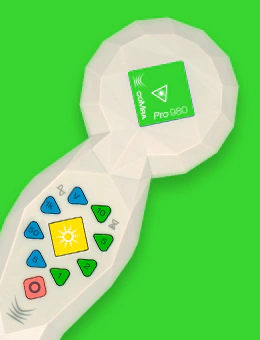
When selecting a device, consider your specific needs and the severity of your condition. The coMra Delta 905 is highly direct and fast-acting, making it excellent for long-standing, severe, or degenerative conditions. The coMra Delta 980 and the coMra Palm are often more "forgiving" for general use, especially for those who are just beginning their journey.
If you are unsure where to start, the coMra Palm is a fantastic entry point. Many users start with the Palm and later add a Delta device to their toolkit. Regardless of the device, the key is to remain consistent, start gently, and listen to your body. As the team emphasizes, there is no "wrong" way to begin, provided you remain an active, observant participant in your own healing process.


 coMra user guides


 Articles
 Testimonials
 Case studies
 Podcasts




 Customer services
 User support
 Schedule a call
 Chat with us

 My last searches
 Popular searches