Healing the Eye and Improving Vision with Light and Colour
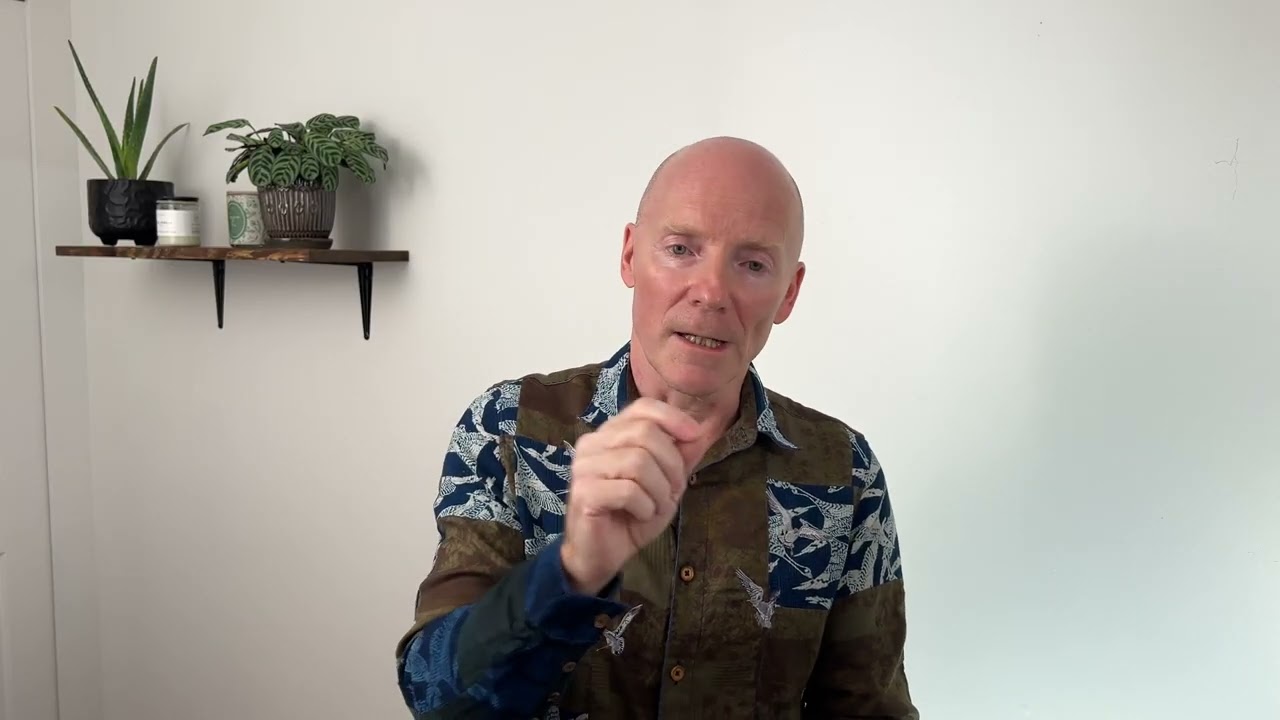
In this episode of the Healing with Coherence podcast, host Mikel welcomes Dr. Larry Wallace, a distinguished doctor of Optometry and PhD in ocular phototherapy. With over 48 years of clinical experience in Ithaca, New York, Dr. Wallace is a leading authority in the field of syntonic optometry. Having served as president of the International Light Association and Director of Education for the College of Syntonic Optometry, Dr. Wallace shares his profound insights into the therapeutic application of light and colour for restoring vision and systemic health.
Understanding Syntonic Optometry
Dr. Wallace explains that optometry is a comprehensive, science-based profession focused on the visual system. While mainstream optometry often relies on lenses, surgery, and pharmaceuticals, Dr. Wallace specializes in "syntonics" – a term derived from the word "syntony," meaning to bring into balance.
Syntonic optometry involves applying specific frequencies of light into the eyes to influence the autonomic nervous system. By targeting specific brain centers, this therapy facilitates physiological, metabolic, and emotional shifts that support vision and address conditions stemming from systemic imbalances rather than just structural eye issues. Dr. Wallace notes that while vision therapy has been practiced for over a century, it remains an underutilized modality, with only a small percentage of optometrists integrating light therapy into their practice.
A Holistic Approach to Vision
Dr. Wallace’s journey into this specialized field began with a desire to understand the intersection of perception, psychology, and physics. Early in his career, he became disillusioned with high-volume, production-based clinical models. His perspective shifted when he met Dr. Ray Gottlieb, who operated a multidisciplinary practice in Northern California. This environment – which integrated nutrition, bodywork, and psychology – showcased the potential for a truly holistic approach to eye care.
Dr. Wallace emphasizes that the eyes are not isolated organs; they are deeply connected to the cervical spine, the vestibular system (inner ear), and the body’s overall posture. He highlights that the eye is the most metabolically active end-organ in the body, requiring significant energy and blood supply to function optimally. Consequently, vision problems often reflect broader systemic stress.
The Role of Movement and Attention
During the discussion, Dr. Wallace details the use of dynamic movement, such as trampoline exercises, to train visual attention and memory. By requiring patients to maintain rhythmic movement while performing complex visual and auditory tasks, practitioners can help patients overcome frustration and improve their ability to process information. This "attention memory training" helps integrate the mind, body, and emotions, fostering a higher level of cognitive and visual resilience.
Addressing Modern Environmental Stress
Dr. Wallace identifies "near-point stress" – the result of spending hours focusing on screens and mobile devices – as a primary driver of the current epidemic of nearsightedness. He notes that the human visual system did not evolve for such prolonged near-centered tasks. To mitigate this, he advocates for the "20-20-20 rule": every 20 minutes, look away at a distance for 20 seconds, while blinking and breathing deeply.
Beyond digital strain, Dr. Wallace points to light pollution and poor environmental lighting as significant factors that compromise the energetic metabolism of the eyes. He stresses that simple lifestyle interventions, such as increasing movement and spending time looking at distant horizons, are essential for maintaining visual health.
Mentorship and Future Directions
Reflecting on his career, Dr. Wallace acknowledges the profound influence of his mentors, including Dr. Ray Gottlieb and Dr. Riley Spitler, the founder of syntonics. Dr. Spitler’s 17 years of interdisciplinary research – drawing from physics, physiology, and psychology – laid the foundation for the science of syntonics.
In his latest book, Reflections of Light and Vision, Dr. Wallace aims to bridge the gap between traditional optometry and light-based therapies. He also discusses his exploration of microcurrent therapy, which uses low-level electrical frequencies to support patients with degenerative eye conditions like macular degeneration and retinitis pigmentosa. For Dr. Wallace, the journey of understanding the healing power of light is a lifelong pursuit, one that continues to offer new possibilities for those seeking alternatives to conventional medical interventions.
The Bioelectrical Nature of Healing
Dr. Larry Wallace emphasizes that the human body is fundamentally more bioelectrical than it is biochemical. In his view, our physiology and biology are governed by physics, where chemistry is directed by the energy and information provided by electromagnetic forces. This understanding led Dr. Wallace to pioneer a microcurrent device – the first of its kind patented in the United States for the treatment of retinal disease. By introducing low-level electrical frequencies into the eye, he and his engineering team achieved significant success in reducing inflammation, increasing circulation, and minimizing scar tissue.
This approach works by stimulating the mitochondria within the cell, a process now widely recognized as photobiomodulation. Dr. Wallace notes that while light therapy operates within the visible electromagnetic spectrum, using lower frequencies – such as 40 to 200 cycles per second – allows for a more physical, targeted application that mirrors the profound effects of his earlier microcurrent research.
Integrating coMra Therapy
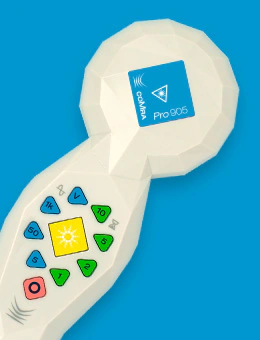
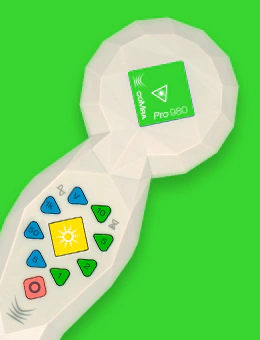
During his search for advanced light-based technologies, Dr. Wallace discovered coMra therapy. He was immediately drawn to the coMra Delta laser because it combined multiple modalities – infrared light, specific colored light, pulse magnetic fields, and ultrasound – into a single, coherent device.
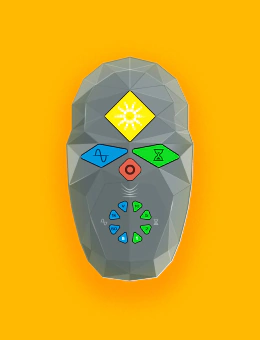
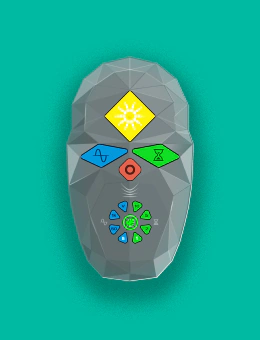
Dr. Wallace has utilized the coMra Delta extensively in his clinical practice, particularly for treating brain injuries, strokes, and nerve-related eye muscle paralysis. He highlights that the device’s ability to provide multi-radiance applications makes it an exceptionally effective tool for rebalancing the autonomic nervous system. For home use, he often recommends the coMra Palm to his patients, noting that even short, five-minute applications can revitalize the eyes by stimulating cellular metabolism and ATP production.
Coherence and the Nervous System
In the context of the Healing with Coherence podcast, Dr. Wallace defines coherence as a state of balance within the autonomic nervous system. He explains that the sympathetic and parasympathetic branches must work in harmony to maintain health. True coherence is not merely equality between these branches, but a dynamic interface that allows the body to function efficiently while responding to both internal and environmental stimuli. When this natural state of coherence is lost, the body’s innate healing capacity is diminished; therefore, the goal of therapy is to restore this fundamental balance.
Addressing Vision and Emotional Well-being
Dr. Wallace challenges the common belief that refractive errors like myopia, hyperopia, and astigmatism are untreatable. He suggests that these conditions often have behavioral and emotional roots. For instance, he links nearsightedness to fear and a desire to "shut down" the world, while astigmatism is often associated with unresolved conflicting emotions.
To address these issues, Dr. Wallace employs a holistic approach: * Light Therapy: Using specific colors to relax overactive eye muscles or stimulate underactive ones. * Cranial Adjustments: Working with specialists in cranio-osteopathy to align the bones of the head, as misalignments can pull on the eye muscles. * Behavioral Hygiene: Teaching patients to maintain proper posture, lighting, and peripheral awareness to reduce visual stress.
He also emphasizes that head injuries – whether from accidents, strokes, or other trauma – frequently disrupt the visual system and the autonomic nervous system. Neuro-optometric rehabilitation, combined with interdisciplinary support from physical therapists, chiropractors, and nutritionists, is essential for recovery.
Prevention and the Future of Optometry
For Dr. Wallace, prevention is the cornerstone of eye health. He advocates for early eye exams to detect functional breakdowns before they become structurally embedded. Simple interventions, such as prescribing very weak reading glasses to reduce near-point stress, can often prevent the development of myopia.
Looking toward the future, Dr. Wallace sees a double-edged sword: while therapeutic technologies like photobiomodulation and syntonics are becoming more sophisticated and globally accessible, environmental stresses and poor nutrition continue to challenge human health. Despite these obstacles, he remains optimistic about the growing integration of light-based therapies in mainstream practice. He encourages patients to take an active role in their health by cultivating good visual habits and seeking out interdisciplinary care, reaffirming that the body possesses a remarkable, inherent power to heal when provided with the right support.





 coMra user guides


 Articles

 Testimonials
 Case studies
 Podcasts




 Customer services
 User support
 Schedule a call
 Chat with us

 My last searches
 Popular searches