The Intersection of Movement, Responsibility, and Longevity
In this episode of Healing with Coherence, a podcast series brought to you by Radiant Life Technologies, we explore the evolving landscape of health and medical technology. Our focus remains on the profound transformation of healing practices and the necessity of taking personal responsibility for our state of being.
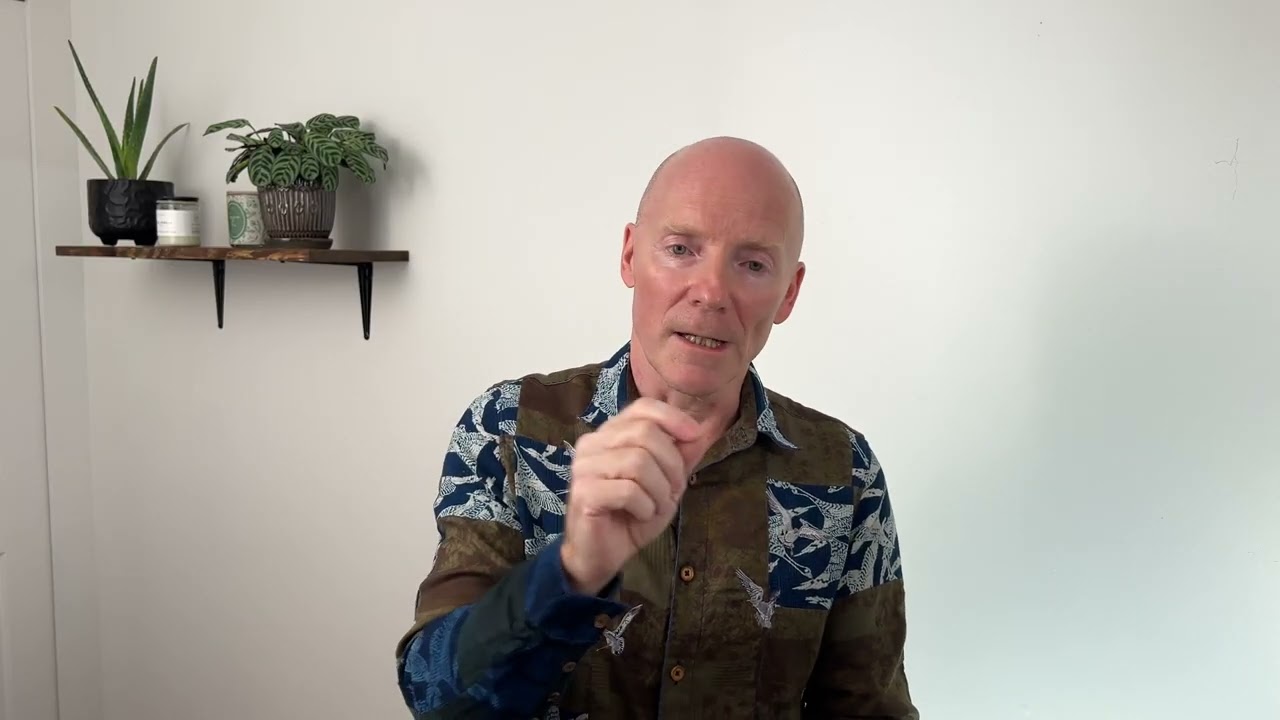
Today’s guest is Cameron Shayne, a master martial artist and the founder of Budokon. Since its introduction in 2001, Budokon has integrated the combat arts of Brazilian Jiu-Jitsu and mixed martial arts with yoga, crawling patterns, mobility, calisthenics, and cognitive studies. Cameron joins us to discuss his approach to longevity, the importance of self-sufficiency in health, and how he guides his students toward a more holistic way of living.
Challenging the Myth of Ignorance
When asked about the primary misconceptions people hold regarding their health, Cameron offers a provocative perspective: he believes the era of "not knowing" is over.
"I don't support the idea that there is any misconception around health and wellness," Cameron asserts. "The access to information is so abundant that it is impossible to deny accountability. We know that processed foods, sugar, and chemical additives are detrimental. At this point, we are not dealing with ignorance; we are dealing with psychological addiction and a lack of will."
Cameron argues that in the modern world, convenience has become a primary driver of behavior. Choosing the "easy" path – disposable, processed, and quick – often overrides the desire for optimal health. He compares the human body to a high-performance sports car: "If I give you an expensive car and you refuse to change the oil or use high-quality fuel, you are choosing to let it deteriorate. The real question is not what people don't know, but why they lack the will to perform the necessary maintenance to live better and longer."
The Role of Autonomy in Healing
A central theme of our discussion is the tendency for individuals to outsource their personal power to experts. Cameron emphasizes that true growth requires the student to take ownership of their own process.
"You have to allow people the space to fail or succeed on their own merit," he explains. "If I am constantly holding a student's hand, they never truly make the dish themselves. They are just following instructions. It is imperative that you allow your student to have an autonomous experience with the work."
Cameron suggests that human motivation is often dictated by a cycle of pain and pleasure. When a person experiences the pain of inflammation or metabolic disruption, they are often pushed toward change. However, he warns against the "middle ground" of mediocrity – a state where one is not suffering enough to be motivated to change, but not thriving enough to experience true vitality.
Defining Health Through Self-Awareness
For Cameron, health is fundamentally about balance and the ability to listen to one's internal compass. Having been an athlete his entire life, he has developed a keen sensitivity to his own "center of gravity."
"I know what I feel like when I am fast, strong, and energetic," he says. "When I start to feel a dip – a red flag – I immediately look for the cause. Am I sleeping differently? Has my diet changed? You cannot be sensitive to these shifts if you weren't paying attention to begin with."
While Cameron admits he spent decades avoiding medical check-ups, he has recently become more curious about his own data as he navigates his 50s. However, he remains cautious about how he interprets these indicators. He notes that certain markers, such as LDL cholesterol, are often misunderstood or over-pathologized by conventional medicine. For him, the ultimate indicator of health is not a lab report, but the quality of his daily experience, his cognitive sharpness, and his ability to maintain his vitality.
"We are living in the greatest experiment in human history," Cameron concludes. "We have access to everything, yet we are often paralyzed by comfort. For those who are open-minded and actively pursuing a better life, the resources are there. But ultimately, the drive for greatness must come from within."
The Role of Technology and the Reality of Chronic Illness
Cameron Shayne reflects on the utility of modern medical technology, noting that while it is invaluable for acute interventions – such as treating broken bones, managing trauma, or utilizing life-saving antibiotics – its efficacy in addressing the root causes of long-term chronic illness is often lacking. He emphasizes that many of the health crises faced today are, in essence, man-made, stemming from lifestyle choices and environmental exposures that could be mitigated through more conscious living.
"I would imagine you could eradicate 80 to 90% of all chronic illness with proper lifestyle choices," Cameron suggests. He clarifies that he is not against medical intervention; he remains grateful for anesthesia and pain management when acute, unavoidable crises occur. However, he argues that the current healthcare paradigm often fails to address the foundational issue: the individual’s responsibility for their own vitality. Even in cases of external factors like Lyme disease, he posits that an individual’s underlying health – built through diet, movement, and immune resilience – determines how effectively the body navigates and recovers from such challenges.
The Warrior Archetype and the Philosophy of Budokon
When discussing the concept of "coherence," Cameron notes that while he does not use the term in his daily practice, he views it as a way to describe a life that is "yoked together" – a state where one’s actions, thoughts, and physical existence are integrated. This philosophy is the cornerstone of Budokon, which he describes as a path rather than a mere methodology.
"The way you do anything is the way you do everything," Cameron explains. He views the warrior archetype not as a singular, aggressive role, but as a "renaissance" character – a blend of artist, poet, fighter, and monk. In his view, Budokon serves as a university of sorts, combining the restorative, internal focus of yoga with the external, protective, and confrontational nature of martial arts. By yoking these disparate paths, practitioners learn to navigate the "rivers" of different disciplines to eventually prepare for the "ocean" of life’s unpredictable challenges.
Movement as a Mirror of the Self
Cameron dismisses the notion that the connection between movement and the mind is a new or innovative discovery. He points out that this relationship has been self-evident throughout human history, from ancient martial arts traditions to modern dance. To him, the more pressing issue is the societal decline in movement as a communal experience.
He expresses concern that humanity is increasingly trading authentic, physical engagement for the passive consumption of digital content. Because the human brain is essentially a "pharmacy" capable of producing chemicals that simulate the feelings of excitement, fear, or love through observation alone, people are becoming addicted to the comfort of screens.
"It is probably the worst thing human beings have ever figured out about consciousness," Cameron warns. He argues that by choosing the comfort of observation over the struggle of physical participation, society is losing the very thing that defines the human experience. He concludes that the true challenge of longevity is not just maintaining physical fitness on a treadmill, but preserving the active, communal, and vital nature of human life before it is lost entirely to the convenience of modern existence.






 coMra user guides


 Articles

 Testimonials
 Case studies
 Podcasts




 Customer services
 User support
 Schedule a call
 Chat with us

 My last searches
 Popular searches