The Power of Inquiry: Becoming Your Own Health Detective
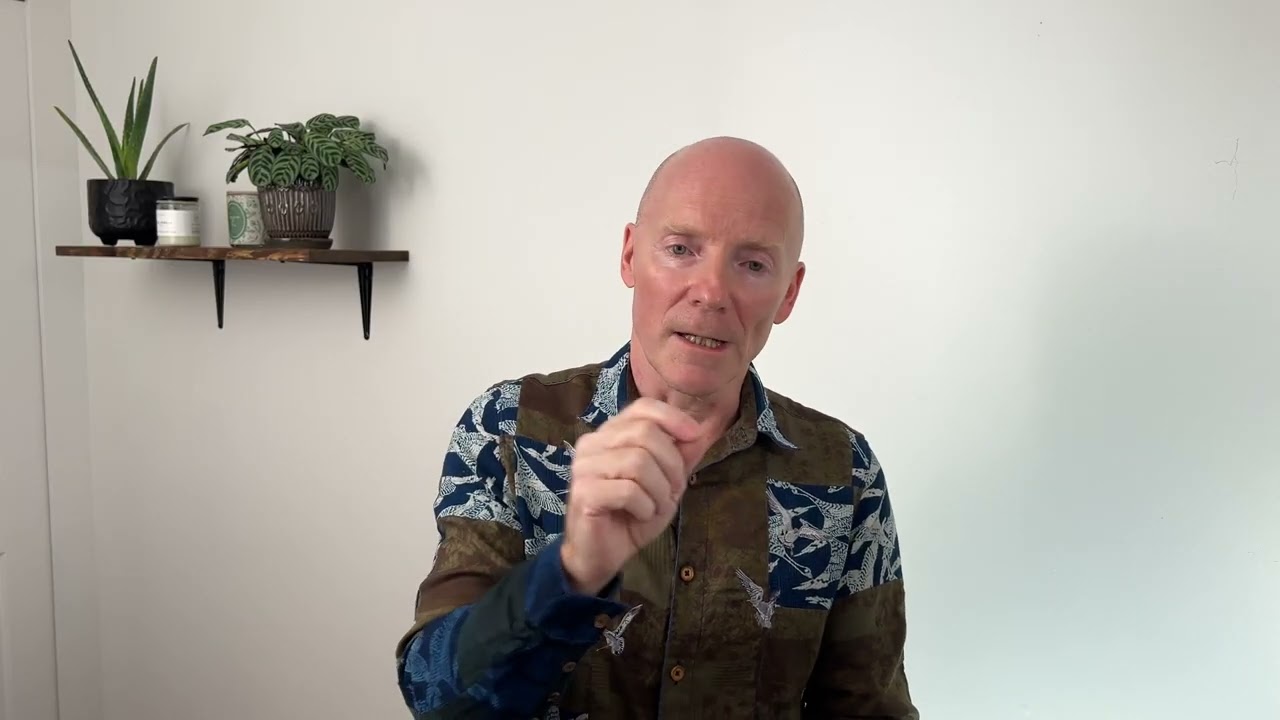
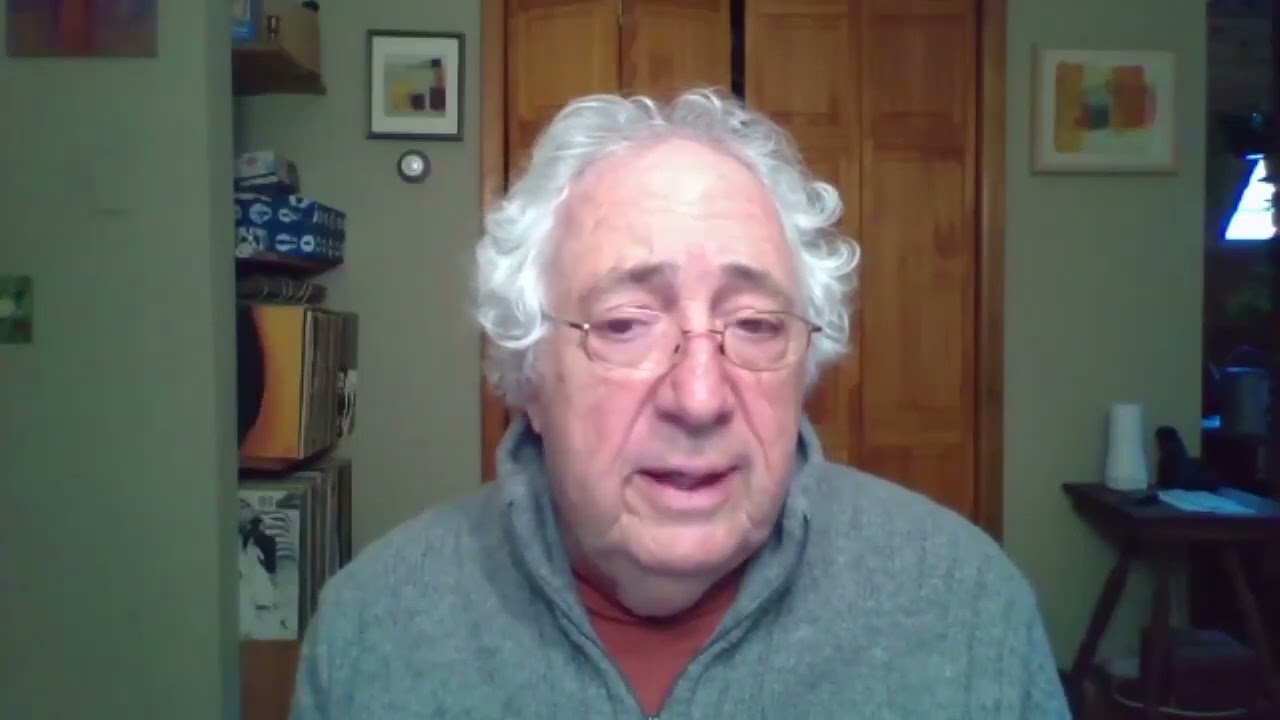
In this episode of the Healing with Coherence podcast, host Michail Tsvetanov sits down with Garrett Murrin, the North American Regional Manager for Radiant Life Technologies and a dedicated coMra therapy guide. Together, they explore the transformative potential of the question "What if?" and discuss the journey toward becoming holistically self-sufficient.
The "What If" Philosophy
Garrett Murrin explains that for years, he used the question "What if?" as a tool to open a "gap" in his own thinking – a pause that creates space for new possibilities. While he once used this question to engage others, he noticed that people often felt pressured to provide an immediate, "correct" answer, which sometimes led to discomfort rather than exploration.
"I found that people started to feel uncomfortable in trying to answer that question," Garrett notes. "Instead of it opening up the unknown, people would feel bad that they didn't know the answer, or they just wouldn't have any context for it."
Today, Garrett uses the question primarily as a personal tool. It serves as a compass for his life’s path: if he can see exactly how a project or a path will end, he often chooses to step away. He prefers to remain on a path where the potential for growth and discovery is continuous and the end is not yet visible.
From Electricity to Healing
Garrett’s transition from a career in the electrical industry to his current role with Radiant Life Technologies was driven by this same spirit of inquiry. His life has been defined by a desire to understand how things work – whether it was taking apart his car as a young man or, later, exploring the intricacies of human health.
"What if people could do more for themselves than they currently may be aware of?" Garrett asks. This question became the cornerstone of his work with coMra therapy. He observes that many people, feeling beaten down by the stresses of modern life, often retreat into a defensive posture –"keeping their heads down in the trenches" to avoid further pain. His mission is to help individuals step out of those trenches and realize their own capacity for healing.
The Limbic System and the Path to Health
When discussing why people lose their natural, childlike curiosity, Garrett points to the biological reality of the limbic system. He explains that the brain operates on two primary circuits: reward and punishment.
"Once the punishment circuit is dominant in the limbic system – which it is for, sadly, most people – the magic of life is gone," Garrett explains. "However, this 'what if' question leads oneself to the reward circuit. Once the reward circuit is dominant, the ability to experience that natural intelligence starts to be felt again."
Garrett emphasizes that this is not about "childishness," but rather a return to a state of "childlikeness" – a natural, inquisitive state of being. He acknowledges that his own journey toward this understanding was born out of his lowest points, which ultimately built the resilience necessary to move forward.
The Role of the Guide
A central theme of the conversation is the distinction between an "expert" and a "guide." When Michail introduces him as an expert in coMra therapy, Garrett gently corrects the framing. He views himself not as an authority with all the answers, but as a guide who shares his own experiences to help others navigate their own healing journeys.
"In North America, the formatting is that experts are the ones with the answers," Garrett says. "But when you have very specialized knowledge, it usually precludes the whole. You are your own sovereign kingdom, and you are getting advice, guidance, and information from someone passing through your kingdom."
Garrett encourages people to become their own "health detectives." Rather than feeling interrogated by health professionals or feeling that their physical symptoms are a personal failure, he suggests that individuals should approach their health with curiosity. By using tools like the coMra protocols, individuals can begin to observe the connections between their mental state and their physical well-being, allowing the healing process to unfold naturally and respectfully.
"Only the individual can know what is going on in their body," Garrett concludes. "They already know more than anyone else. My role is simply to hold the door open and facilitate that process."
The Myth of the Expert and the Sovereignty of the Individual
Garrett Murrin continues his exploration of personal health, cautioning against the cultural tendency to place "experts" on a pedestal. He draws a parallel to the nursery rhyme of Humpty Dumpty: when we elevate someone to the status of an infallible expert, we place them on a wall. Eventually, the energy required to maintain that position – and the inevitable fall that follows – becomes a burden.
"When a person is trapped in a limbic system punishment-dominated circuit, they are often living in fear," Garrett explains. "It is a huge relief when someone else says, 'I have the answer for you.' But that relief is temporary." He cites the late Dr. Willix, a former heart surgeon who, after years of performing complex procedures, realized that many of his patients were simply returning with the same issues three years later. Dr. Willix eventually walked away from the "big shot" medical establishment to pursue holistic medicine, recognizing that the individual is the true sovereign of their own health.
Garrett emphasizes that while specialized knowledge is valuable, it should be used as a guide rather than a replacement for one’s own intuition. "Anyone can gain specialized knowledge through consistent application over time," he notes. "To make that person greater than yourself is disempowering. I don't want to give up my own sense of what fits for me."
Complexity vs. Wellness
The conversation shifts to the perceived complexity of the human body. While the biological reality is undeniably intricate – involving trillions of cells and 50,000 chemical reactions per second – Garrett argues that the modern medical approach often makes the mistake of "drilling into the rabbit hole." By focusing exclusively on dissecting specific problems to find a single, isolated fix, we often lose sight of the whole person.
"If you only focus on what is wrong with you, how are you ever going to feel happy?" Garrett asks. He suggests that true healing requires a shift in focus toward wellness – not as an escape, but as a foundational practice. He shares the example of the "lowly chicken," which can synthesize calcium from silica within its mitochondria – a feat that would require thousands of degrees of heat in a laboratory. This, he notes, is evidence of the body’s innate, intelligent design.
"The only purpose of everything happening here is to lead us back to ourselves," Garrett says. "Experts can support us to the point where we can take over the process, but they should never take the process over."
The Practice of Presence
When asked about the most prevalent mindset preventing people from living healthy, happy lives, Garrett points to the "doing" trap. "Life is about trying to solve problems rather than enjoying life," he observes. Because people are constantly moving from one task to the next without pause, they leave no space for their own natural intelligence to emerge.
He clarifies that this "pause" is not necessarily about meditation or sitting on a pillow; it is about bringing oneself into the equation. Whether one is an athlete or a patient, the goal is to act as an expression of one's authentic self.
"When you have an increase in healing, it is not an indication to do more," Garrett warns. "Almost everyone, once they feel better, does more, which perpetuates the cycle." Instead, he encourages a continuous, purposeful practice of checking in with oneself. By moving from a "problem-solution" mindset to one of "wellness and potential," the body’s limbic system shifts from a punishment circuit to a reward circuit.
Coherence and the Path Forward
As the body becomes more coherent, so does one’s thinking. The focus shifts from merely surviving in the "trenches" to exploring possibilities and creativity. Garrett concludes by reminding listeners that this transition is doable for everyone, provided it does not become "just another thing to do."
"There is nothing wrong with you that needs to be fixed," Garrett asserts. "You are not broken. We are simply adjusting from being solely focused on solving problems to cultivating wellness as a continuous practice."
This journey back to the self is the essence of the healing process. By acknowledging our own sovereignty and allowing ourselves the space to simply be, we move closer to the quality of life we truly desire. As the podcast concludes, the message remains clear: the most important expert in your life is you.







 coMra user guides


 Articles

 Testimonials
 Case studies
 Podcasts



 Customer services
 User support
 Schedule a call
 Chat with us

 My last searches
 Popular searches