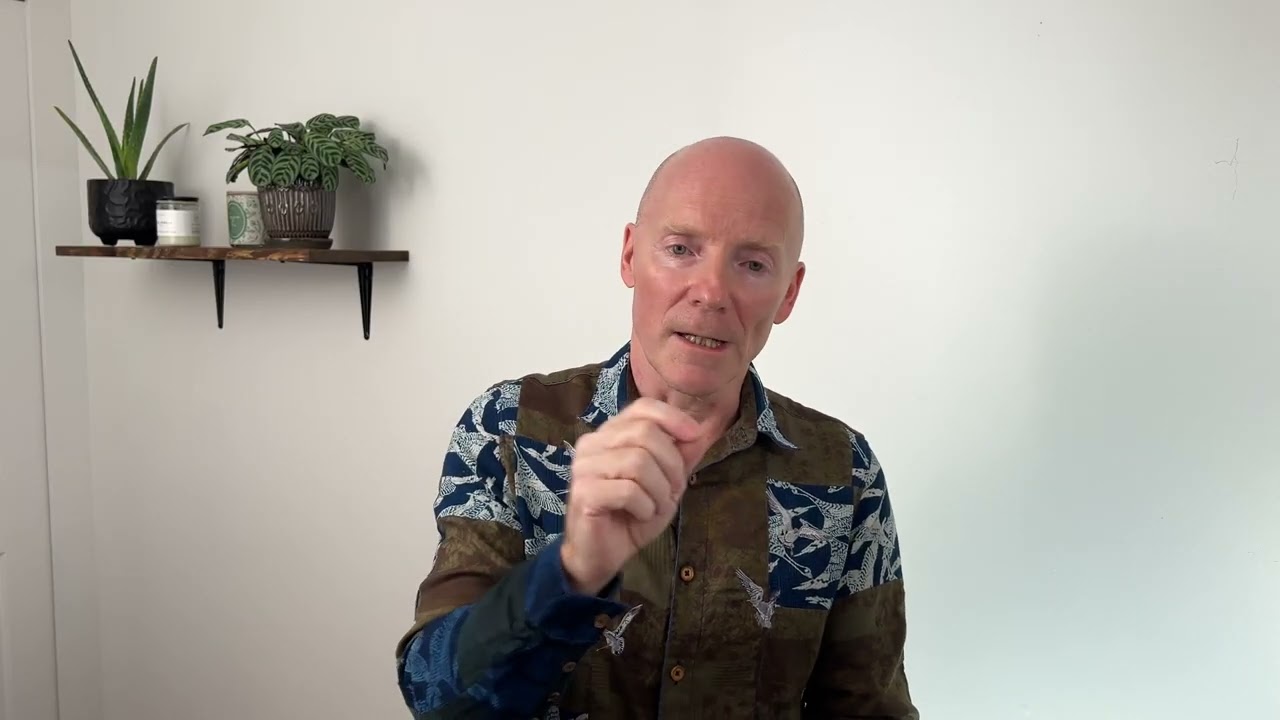
Interview with Dr. Adrian Marsh on coMra Therapy and the Toltec System of Knowledge
Introduction
- Dr. Adrian Marsh is a physicist and co-inventor of the Delta laser and coMra therapy
- He has been researching renewable energy and electricity for over 20 years
- His work is based on Nikola Tesla’s principles and the Toltec system of knowledge
Key Concepts
Path with a Heart
- Science, technology, and computing can be a “path with a heart”
- It’s about finding what makes your heart sing and is not just work
- A path with a heart is an expression of one’s inner journey and true self
Life Supportive Technology
- Technology that assists in growing relationships and expressions in life
- Enables life to grow naturally in an inclusive way
- Contrasts with life-destructive technology
Toltec System of Knowledge
- “Toltec” means man or woman of knowledge
- Focuses on inner knowledge and self-awareness
- Provides a framework for understanding principles beyond face value of life
coMra Therapy Development
- Came to Dr. Marsh in a dream
- Result of collective intent and group work
- Represents a life-supportive technology to assist in healing
Foundation for Toltec Research
- New organization based on the five pillars of wisdom:
- Education (East)
- Medicine (West)
- Religion (South)
- Politics (North)
- Science (encompassing all)
- Supports endeavors based on the Toltec system of knowledge
- Encourages group-conscious and life-supportive work
Conclusion
- The interview demonstrates the interconnectedness of various principles
- Emphasizes the importance of finding one’s path with a heart
- Encourages further exploration of coMra therapy and Toltec knowledge
Interview Transcript (Part)
Q: Adrian, what is one fascinating thing about technology that has kept fueling your love and passion for science and technology during your whole life?
A: Basically, science, technology, computing is a path with a heart for me. By path with a heart, I mean something that makes our heart sing. It’s not like doing work, it’s something that we just take as a journey. It’s enthusing, engaging, and it brings out really an expression of my own inner journey, my true self, my desire to learn, my creativity.
It started for me right from the word go. When I was young, I was always fascinated with how things work, why things work. In later life, I learned that was fascinating in how I work. If what we do in the outside world is merely a reflection of the relationship we have with ourselves inside, then for me, it was always about how things work.
Q: Can you advise our listeners, especially those that are still searching themselves in life, how one can find their path with the heart?
A: I can certainly explain how it happened for me. I was fascinated in everything technology, everything science, everything computing. I couldn’t get enough of it. But of course, that was everything in the outside at those times. I didn’t think about how I was seeing it on the inside when I was young.
When I was 25, that started my journey looking for what was on the inside. And that is where the path with the heart is to be found. Recognizing that somehow what I was looking for through my expression with science and technology and computing was somehow reflecting something inside for me, that started that inner journey.
Your path with a heart is discovered by exploring yourself. When the self expresses, that really is going to lead you to your sense of purpose, what you’re here to learn, and then to express those things that are most important to you.
Q: What is the meaning of life supportive technology?
A: To really understand what’s life supportive, we have to look at both sides. We need to look at what is supportive to the process of growth of life and the unfolding of what we would call the awareness of life. On the other side is life destructive.
Life supportive things are where we are working with the process of life. We’re in synchronicity with it, in harmony with the natural order and natural processes going on. A life supportive relationship is one where both people feel that they are growing.
When we bring that to technology, a life supportive technology is going to assist us in growing our relationships, our expression in life, allowing and enabling life to grow in its own natural way as well, and in an inclusive way.
Q: Does that mean that the central point in your work, which is your life work in the development or your research in the field of energy and electricity, has been looking for life supportive solutions in that field?
A: Yes, let’s look at that in terms of energy and electricity. For example, nuclear fusion is meant to be an inclusive process. But the way in which technology or science is currently trying to approach nuclear fusion is not from a life supportive perspective.
The way that we are approaching that in conventional science is you take two atoms and force them together as hard as you can. Problems that science has thus far found is that it takes an awful lot of energy to force the atoms together and after a while, they don’t want to stay together. So it’s not sustainable.
From a life supportive perspective, it would be much better to encourage those atoms to get to know each other, come together, and start drawing together of their own accord. That would be an inclusive, life supportive approach.




 coMra user guides


 Articles
 Testimonials
 Case studies
 Podcasts




 Customer services
 User support
 Schedule a call
 Chat with us

 My last searches
 Popular searches