1. *Summary: Arzhan Surazakov and Garrett Murrin discuss the importance of timelines in understanding health histories, using examples of a woman with migraines and Arzhan's father with glaucoma. They emphasize the cyclical nature of health issues and the need to look beyond symptoms to identify underlying causes, including emotional and environmental factors. They also highlight how coMra therapy can be used to address these issues.*
So let me share one example. So this is a case of a woman. She is 42 years old and she had a history of migraine. So what you will see here on top, on top you will see the timeline. This is her health history. So at the age of 22, her migraine started and today or start of care, she was 42 years old. Woman she migraine for pretty much most of the adult life, 20 years. And lately, she was also identified medication overuse headache. So this is easy and this is something you plot straight away on the timeline. Now next thing you may want to plot something like medication. So okay, she had Zolmitriptan since the age of 29 years old and then Eletriptan for the last couple of years as well. then you can also add different therapies she tried, she tried walking no experience, she's on going psychotherapy, she walks every day. From the science, which is the some kind of tests, observations, I only have the recent information about MRI, we found no pathology. Now you get to the deeper level, so you start to look at the symptoms and you're trying to look in the past and also connect to different events. So starting of migraine in this case was related with the first pregnancy. What happened is that she said she felt that her husband is not taking responsibility for having a child. So that's when her migraine began. So something happened and -- but migraine was still manageable, it was one attack per month. During the second migraine at age 29, situation repeated itself. So that's when migraine got worse. Then the condition started to deteriorate in the family until at age of 32, they divorced and then migraine actually got even worse. So there was a whole story behind just one symptom of migraine. And here it's important to again, you may stay at the level of symptoms and that's it. Or you can also go even deeper and trying to identify what emotions and feelings were happening for her at those events and we're responding to those symptoms and so on. So this is just to give you a brief example how one can view a health history of a person on a single screen. So we're trying to see all the way from the circumstances in life, something that we perceive as external like getting a job or moving to a different house, all the way down to how we felt about it. And obviously, in every case, there will be different relevant issues. Do you want to add something, Garrett?
One thing I really wanted to emphasize from this is that comes through is cycles. And I've had this experience in my own life where things seem random. But as I started to plot the dates and times and these overlaps between them. And I've worked with some people and done this too. Once those seemingly random things start to line up on these timelines and this kind of thing, all of a sudden, it goes from being random to, okay, there's some sort of connection here. And then this starts to reveal the cycles. And just to touch on what you said earlier, Arzhan, about how they can repeat with going from a random event to seeing connections to cycles, there's a lot more options of action steps that can be taken at that point because it's kind of like as long as it's random, it's really hard to pin down. But as soon as I started to see the cycles, then I could start to effectively make changes to the behaviors that we're causing. I'll just say for me, like this really very painful upper neck stiffness and when I turn my head pain. So stress related, it's fairly common. but once I started to see the cycles of how that started to come into play where it was starting to manifest physically, I could get to it. Whereas many years, that just seemed like random stuff. So why I'm emphasizing this is these time lines are very important. Thank you, guys.
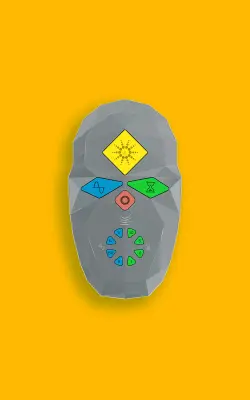
Another example, as I was working on the slide, and just something clicked in my head in parallel, my father was diagnosed with glaucoma about three years ago. and his eye pressure was fairly high. So I got him the coMra Delta 905 and he used it for several months and then his eye pressure came down And since then, he's just doing maintenance treatments from now on then. So about a month ago, he saw suddenly his vision start to like he started to have this curvy waves in his vision field, especially when he started working, like he was chopping wood and suddenly when he his head was down, his vision like started going all wavy and had a quite a strong pain. And automatically we assumed that now that's the glaucoma. and then he can have, how it's called, the acute glaucoma. So he resumed Delta and it helped. But when he went to ophthalmologist and they did the whole test, barrage of tests and the doctor said, you know, your eyes are fine. They look at the, you know, in the eye, everything was fine. The eye pressure was okay. So I started to stretch, okay, but you know, keep treating the eye. And then what occurred to me is that he had the Lyme's disease in last August, a tick bite him and he had that red circle around the tick bite. So he had the tick bite for two weeks before he realized it had a line disease. So he went, he did the treatment with antibiotics and with Delta. But what is his condition right now with this wavy curve vision has something to do with Lyme's disease. So he would still need treat the eye, but also he would need to treat autoimmune, autoimmune, let's say, one or two maybe for his condition. So it clicked for me to realize that, you know, perhaps it's not could be not as simple as just glaucoma. It could be underlying that is also a load because Lyme disease also has visual symptoms when there's the virus being traced into the optic nerves and so on. So it's something I could tell you as I'm working on this slide actually. They need to connect the dots here.




 coMra user guides


 Articles

 Testimonials
 Case studies
 Podcasts





 Customer services
 User support
 Schedule a call
 Chat with us

 My last searches
 Popular searches