1. Summary: This text is a discussion about coMra therapy, focusing on the properties of the laser beam, how it interacts with tissue, and the importance of the magnetic field in enhancing light penetration. It also covers treatment times, the concept of cell saturation with healing energy, and practical aspects of using the coMra device, including treatment order, covering the terminal, and addressing hard-to-reach areas. The conversation highlights the need for personalized treatment approaches based on individual needs and conditions.
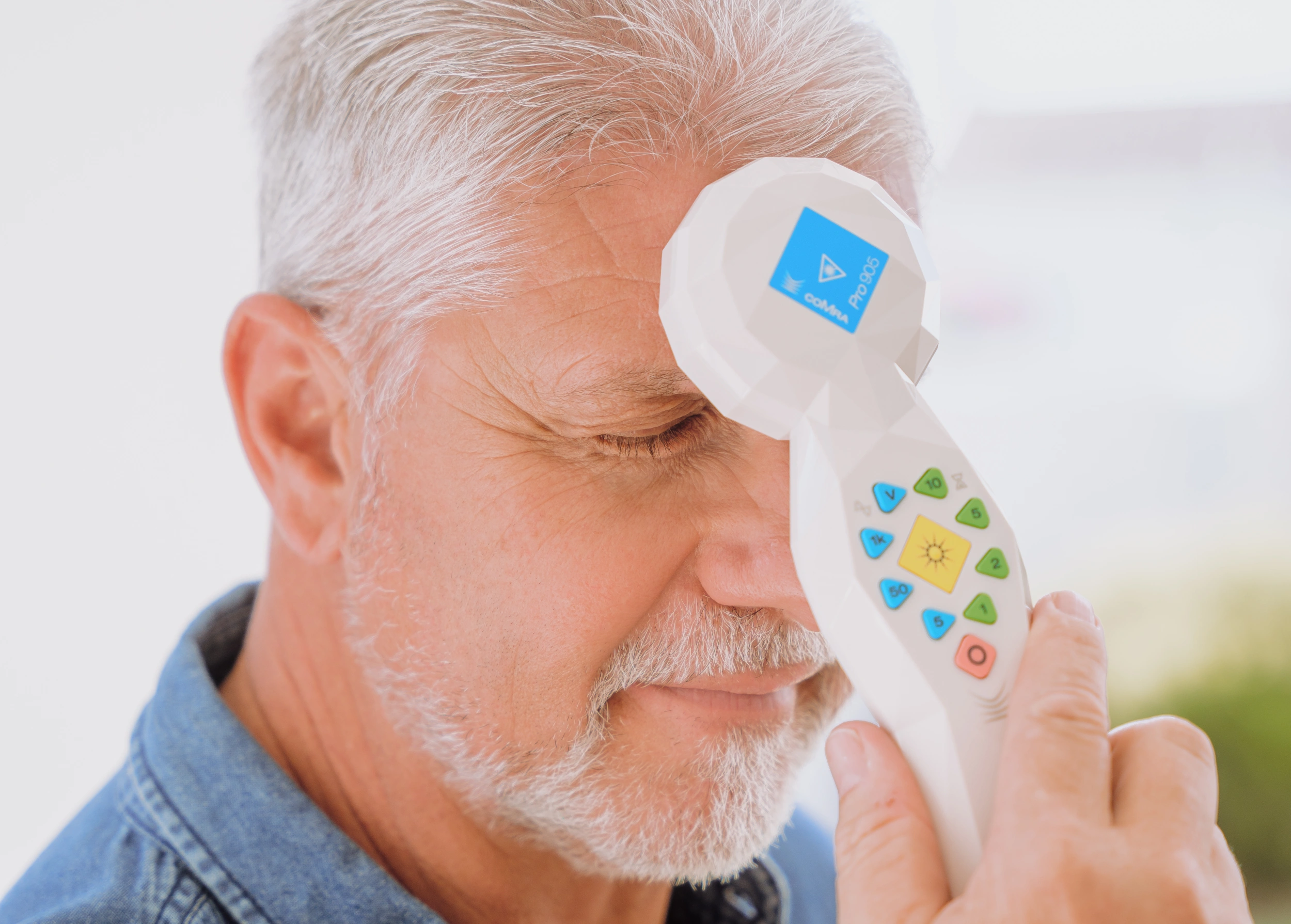
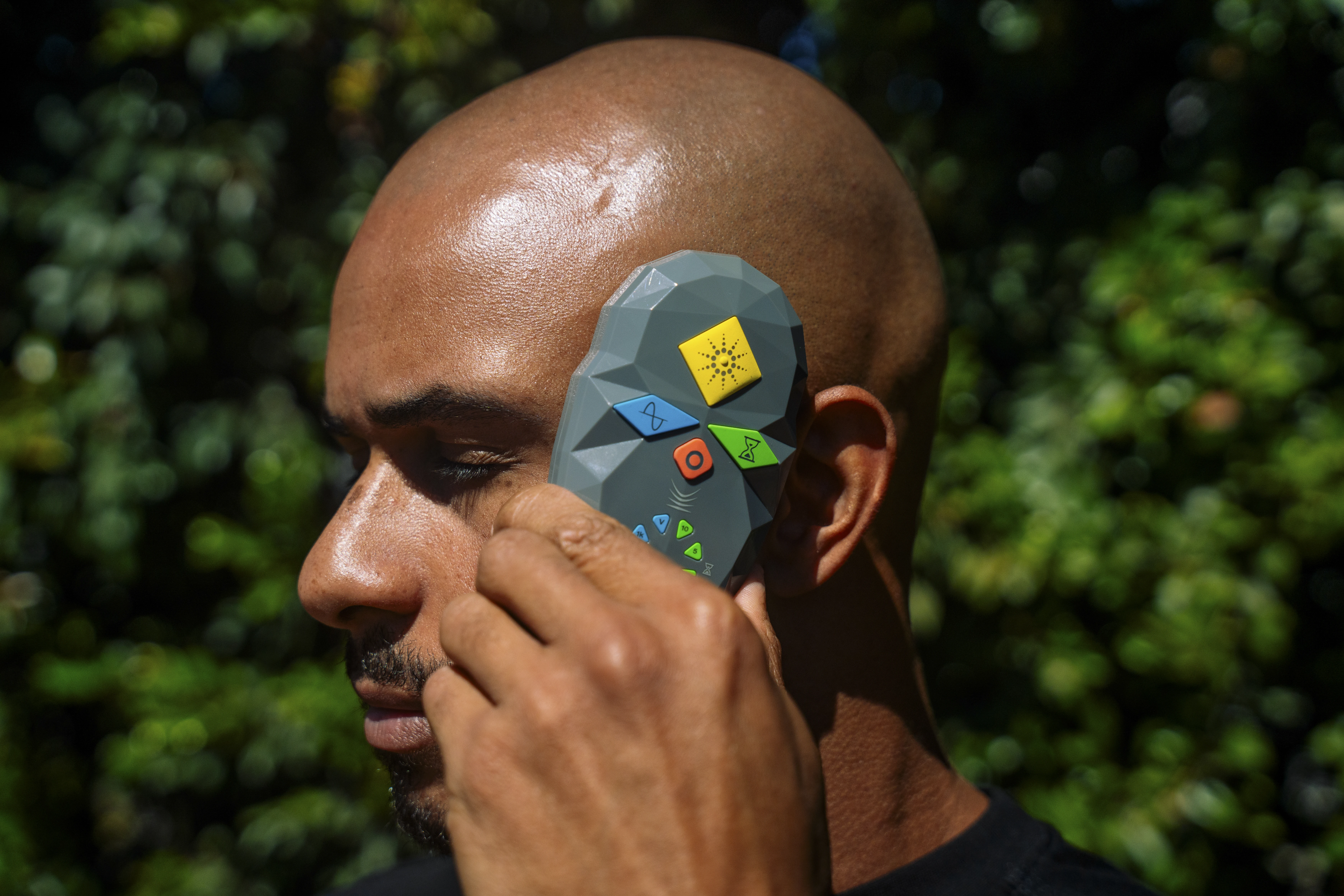
whereas when you take the other radiances, they hit the body and then they start to disperse is how the actual radiance is spread out. So once you get that visual picture, they understand that it's not just this little pinpoint. So that can be helpful when you're talking with people. Can I have a question, Arzhan? Yes, absolutely. You said something about 8 and 3 millimeters. Is it -- that's what Garrett was just talking about, like the laser just like it's not only in the one spot but it's a little bit... Not exactly. Not exactly. The 8x3 millimeters, this is the -- if you look at the laser beam, if the laser beam is focused, it will stay like a very thin beam. But in coMra Delta, the laser is divergent. In other words, it goes like a conical shape. It spreads out. So this is one thing. This is just the optical properties of the laser beam itself. But what Garrett is referring to is that when the laser heats the tissue, the actual cells, there is also internal reflection within the tissue. So now those photons of light that entering the tissue, some of them will go through all the way down, some of them will be scattered. So they were scattered like in all directions like this now, they spread in a wide as soon as the heat the tissue, they start spreading and scattering in all directions. So there will be some photons will be absorbed immediately, a lot of them absorbed in skin. Some of the photons will go through the skin and will go deeper and the deeper, deeper, deeper tissue. So what we'll see is what Garrett described is it's almost like half of the fear from the point where the laser hits the tissue and let's see it sort of grows under the tissue in all directions like this. Okay. But because we have the magnetic field, magnetic field allows the tissue to be, I can say, more transparent. So the tissue becomes more photochemically transparent. So with magnetic field, now the light laser can go deeper and deeper and deeper into the tissue. Excellent. Thank you. And also, it only requires a photon or two to activate a cell. And the amount of photons are astronomical, if you were to like count them all out. So it only takes a tiny, tiny, tiny amount to activate these processes within the body, which comes back, of course, you want to do the minimum amount of treatment to get the results rather than overpowering the body with invasive measures. Some low-level laser manufacturers that say, how would you place a terminal? And some would suggest actually pressing hard to force the blood out of the treatment area. we say, no, we don't have to do this with Delta at all. As long as you basically put a Delta on the skin without any extra pressure, just place it, you're fine. I think this photograph was taken with the lasers just a bit off the skin because there was a scanning motion. So in some treatments, there is also a scanning technique when you are moving Delta across. This is specifically commonly when you treat either a skin for cosmetic or when you want to treat a very sensitive spinal cord and the paraventral zones. So the nerves are very sensitive. So even a little amount of coMra radiance is sufficient to provide enough energy. So when you are kind of controlled motion, move the Delta, the medical terminal across, so basically you are gliding it slowly. And another important point is that the scanning lines in the book, especially for example, if you want to scan hand or if you are scanning a sole of the foot, those lines are only for your reference. There is no specific reason why I have to follow like exactly those specific lines. It's just to give you an idea that you need to cover an area, like for example, if you're scanning a forehead. But when you're scanning both sides next to the spinal column, those are, again, we'll talk about this later, to stimulate the that are stemming from the spinal cord. Time to point. Now in coMra therapy, the treatments are fairly short. This is typically 1 to 5 minutes. And this is because we have four radiances working together at the same time, so there's a synergy of all four radiances. In acute pain and in trauma, up to 10 minutes easy or even more if the person is it is make sense to increase the points just because you know into irradiate the target organ could be deeper, but also it could be much larger in our first By the same token, when you treat children, you would decrease the treatment time. Well, first of all, children are generally much more responsive to Delta. I mean, they don't need generally more treatments anyway. But also because the small and especially if they are under 3 years old, you can use the same treatments as for adults, but you can cut the treatment in half basically. And with the many shorter treatments, just a little analogy. If you look at when there's an acute injury and you can do a lot of short treatments, it's like incremental adjustments. So small incremental adjustments with any kind of acute injury will work very well and speed up the healing process considerably. And then if you're at home, often a lot of shorter treatments can be much more -- for some people, much more convenient. A cell, a diseased cell can absorb a certain amount of energy, the radiance is from the Delta. So it absorbs only as much and once the cell is, I can say, saturated with this healing impact, healing energies, once it's saturated, it cannot absorb anymore. So I mean, you can continue to treat and treat and treat, but cell is already saturated with the healing energy from Delta. So and then the cell will be spending this energy for the healing process to take place. What happens is that once it's full, the cell is full of this energy, it's going to spend it over the next, let's say, if it's acute trauma, it's going to spend it over the next 20 minutes, maybe a couple of hours. And then it again needs that, again needs that support. So when you have a serious deficiency, you can say deficiency of energy, let's say, in the cell, either acute trauma, or the person is really sick, like for example, you will see a treatment for cancer. So you would have that those treatments done throughout the day, exactly with the same idea in mind is that we need to give a cell that support more frequently. But once the cell got all it can handle, it's just simply the extra treatment would not provide extra benefit. Yes. And also just to add to that, if you take the example of what you just shared, Arzhan, if the focus is on, okay, I want to provide this cell support and nutrients in order so it can heal, that's a lot different than, oh, man, I want to get rid of this right now. Next week, we'll touch on, I think, what Garrett mentioned here, especially when it comes to 95. Well, here's the next question. We just discussed how many treatment points and overall time can be done in one day. Exactly what we just talked about is, yeah, it really depends on what the body needs. If the body is really sick and needs a lot of support, then the treatment can be actually quite a lot. But then the treatments again would be spread throughout the day, rather than just sitting and treating yourself for now, for example. I do find that the muscles and joints can take and actually need much more treatment. and especially when it comes to a physical trauma or acute pain. I mean, when I broke my ankle, I was healing a lot, and I mean a lot. The muscles can actually, I guess, because it has so much mitochondria, I mean, they can take quite a lot of treatment. But when it comes, let's say, to the heart, I would not do more than a few minutes. Okay. Order of treatments. Generally, the -- when you see in the user guide, there is 5, 10, 15 points. it's not important in what order you're doing unless it's specifically in the user guide. Some treatments are spread over different days, then yes, you would do the treatments on those days. But generally speaking, you would follow just how it's outlined, but there is no specific reason to treat one organ first and then the other one and so on. Covering a terminal, sometimes you may have to cover it with a clear plastic over the medical terminal, if there is a reason for this, for example, if you're treating over the wound or if there is a concern about infecting a damaged skin and so on. So yes, you may consider that as well. You will see in the user guide, it says, please remove jewelry when you treat around that area. And this is because we don't want the radiances to be reflected from necklaces and things like this because they would reflect or distort the radiances. And also, it's much better idea to treat a person when he's not distracted, he's not talking in a phone. Now treating a fracture, we would then making a hole and treating that place where the fracture is and the hole should be sufficient size to accommodate the whole of medical terminal. And it's not just the laser beam, which is very thin, but all four radiances, including the LEDs and ultrasound should be treated over the treatment area. And you know that sometimes there's more than costs that I think the plastics are removable costs can also use them if possible. Hard to reach areas, when you treat the back or if you are tending to several people, you can use the microphone stands, and this is just one example. So you can position it, turn it on and just wait until it stops. This is something I've made for a number of patients, number of people, clients. It's the 905 because people want more than the coMra Palm on people. It's the 905 on remote so you can lie on it. So this is plugs into the Delta and then you can plug it lay on this, use it, just put it wherever because one of the things that comes up for people, they do not like how it's difficult to treat the back and I agree. So if anybody's interested in one of those custom 905 terminals, you can let me know and they can be made for you.




 coMra user guides


 Articles
 Testimonials
 Case studies
 Podcasts




 Customer services
 User support
 Schedule a call
 Chat with us

 My last searches
 Popular searches